
 Kontakt
 Jak nakupovat
Doručení
Nákupní rádce
 Angličtina
 61 b
61 b
30 dní na vrácení zboží

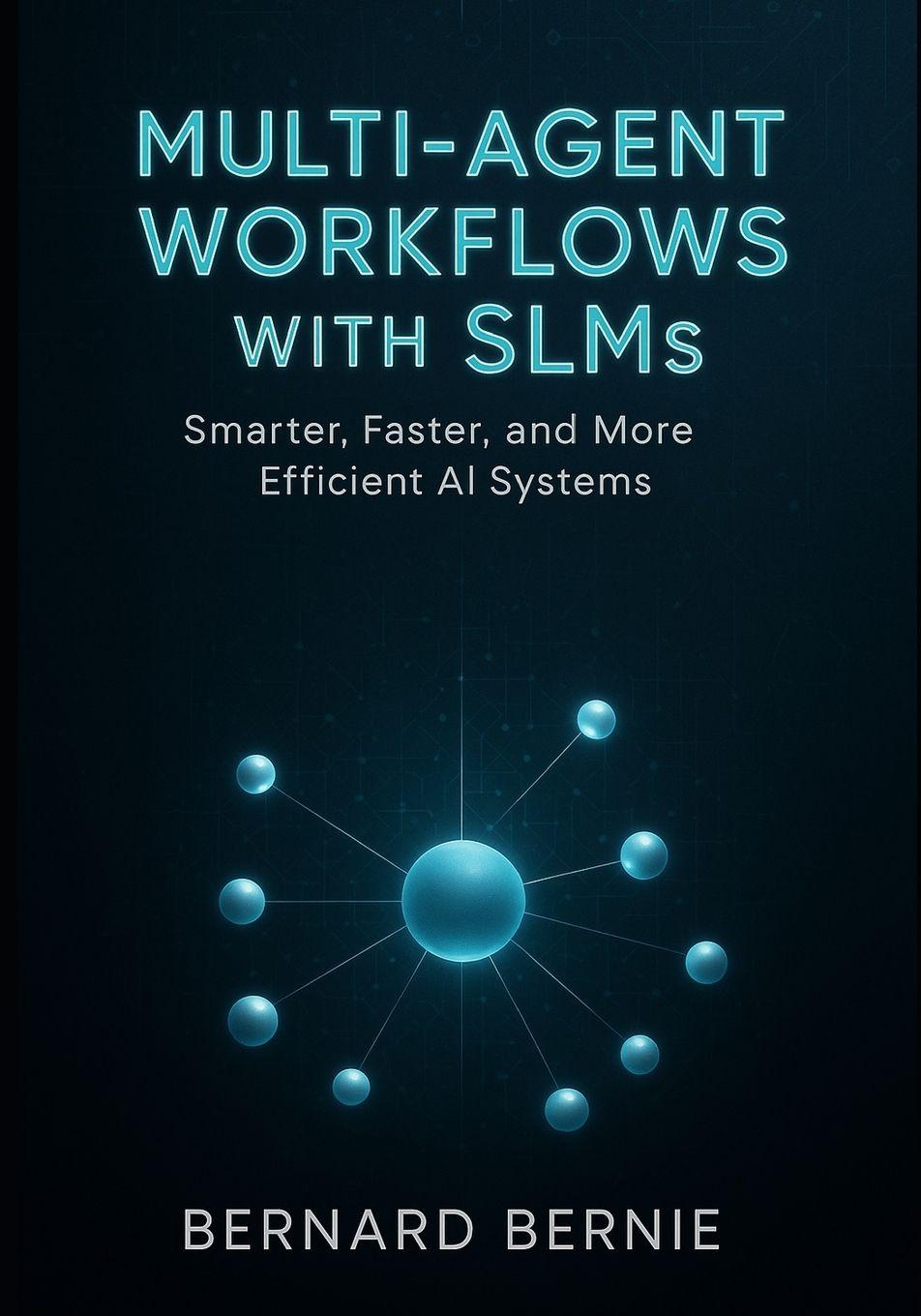
Artificial intelligence is evolving beyond giant, expensive models. The future lies in Small Language Models (SLMs) - efficient, adaptable systems that can run on modest hardware, deliver faster responses, and integrate seamlessly into production environments. But the real breakthrough comes when SLMs are orchestrated together into multi-agent workflows.
This book provides a comprehensive guide to building, scaling, and governing multi-agent systems with SLMs. Written for engineers, researchers, and applied AI practitioners, it explains how to design efficient workflows where multiple specialized agents collaborate, validate each other, and outperform a single large model.
Key areas include:
Why SLMs matter: cost and latency trade-offs vs. LLMs, and where they win in practice.
Agentic patterns: from ReAct and Reflexion to Graph-of-Thoughts, voting councils, and self-consistency.
Architectures: pipelines, hubs, and councils with robust hand-offs, retries, and deadlines.
Infrastructure: serving SLMs efficiently with quantization, batching, and optimized runtimes.
Memory and retrieval: vector databases, summarization strategies, and privacy-aware storage.
Frameworks in action: LangGraph, AutoGen, CrewAI, DSPy, LlamaIndex, smolagents.
Evaluation & observability: benchmarks, CI/CD test gates, dashboards, and regression alerts.
Governance & safety: guardrails, auditability, and policies for production systems.
Case studies & playbooks: real-world workflows in customer support, analytics, CI/CD, and enterprise RAG.
Unlike books that focus only on frameworks or introductions to small models, this work is practical and production-oriented. It bridges the gap between theory and deployment, offering actionable patterns, design strategies, and reliability practices that today's AI engineers demand.
Whether you are an AI engineer seeking efficiency, a researcher interested in orchestration, or a professional preparing for the shift from monolithic LLMs to collaborative SLM ecosystems, this book gives you the tools to build smarter, faster, and more efficient AI systems.


Informace o knize
Angličtina
