
 Kontakt
 Jak nakupovat
Doručení
Nákupní rádce
NEPAL
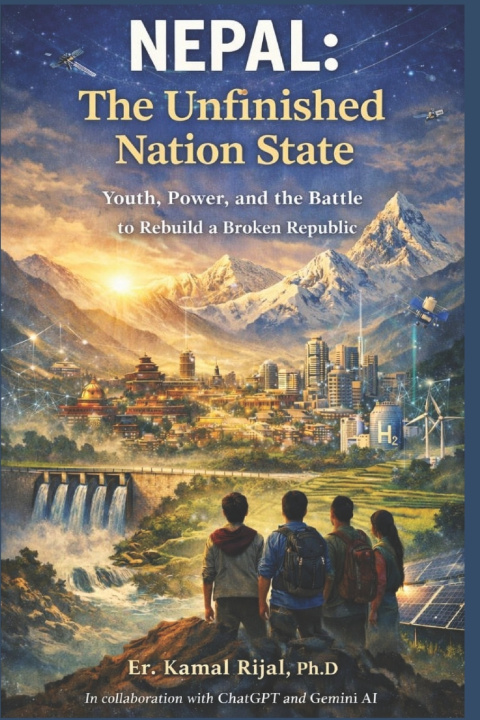
The Unfinished Nation State: Youth, Power, and the Battle to Rebuild a Broken Republic - A country that won democracy but never built a state
 Angličtina
 32 b
32 b
Až 30 dní na vrácení zboží

BOOK OVERVIEW
Why do elections change leaders but not outcomes?
Why does sovereignty feel symbolic rather than real?
Why do small nations remain "independent" yet perpetually constrained?
Nepal: The Unfinished Nation State is a bold, original, and deeply reflective work that examines why modern states-especially small and developing nations-struggle to convert democracy into genuine power.
Drawing from global examples and lived experience, Er. Kamal Rijal introduces a powerful framework that distinguishes between the Human Layer of politics (elections, leaders, parties) and the Systems Layer of governance (finance, security, bureaucracy, data, and international regimes). While citizens vote within the Human Layer, real decisions increasingly occur within permanent systems that remain untouched by electoral change.
The book explores how this Architecture of Permanence operates across the world:
In the United States through military-industrial and financial continuity
In China through a visible Party-State system
In Russia through security-centric force structures
In Europe through rule-based technocracy
In India through strategic autonomy and digital sovereignty
Against this global backdrop, Nepal emerges as a case study of the "Unfinished Nation State"-a country with democratic rituals but limited systemic control. Graduation from LDC status, remittance dependency, energy asymmetries, external debt, data dependence, and security alignment have created a condition the author calls Managed Sovereignty.
Rather than blaming individuals or parties, the book asks harder questions:
What does sovereignty mean in a world of debt, data, and alliances?
Why do "new faces" fail once elected?
How do external systems quietly become a nation's de facto deep state?
What must change for democracy to regain real agency?
Written in clear, narrative prose and grounded in systems thinking, Nepal: The Unfinished Nation State is neither conspiracy nor complaint. It is a diagnostic work-designed to help readers see power as it actually operates.
This book is essential reading for:
Policy thinkers and development professionals
Students of political economy and governance
Nepali readers seeking clarity beyond slogans
Citizens of small states navigating a multipolar world
Above all, it is a call to move from symbolic democracy to systemic capability-from unfinished governance to conscious statehood


Informace o knize
Angličtina
Kategorie

Darujte tuto knihu ještě dnes
Je to snadné
1 Přidejte knihu do košíku a zvolte doručit jako dárek 2 Obratem vám zašleme poukaz 3 Kniha dorazí na adresu obdarovanéhoAhoj! Jsem Libroamiko, tvůj knižní rádce.
Jak ti můžu pomoct?