
 Kontakt
 Jak nakupovat

Doručení
Nákupní rádce
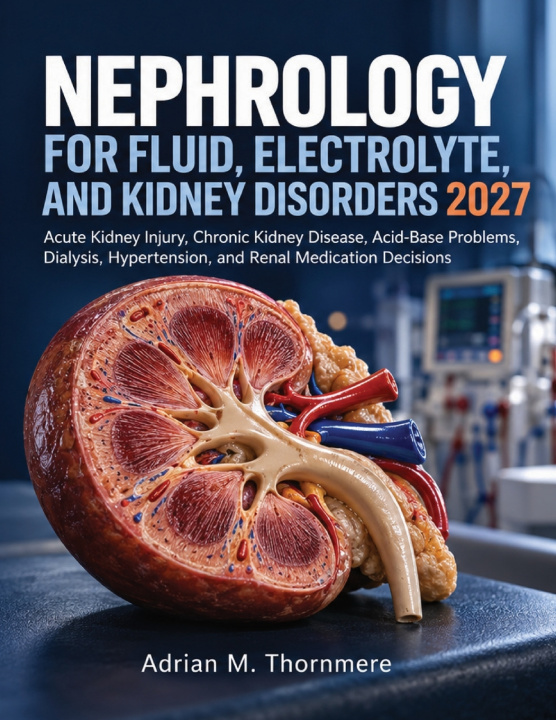
Nephrology for Fluid, Electrolyte, and Kidney Disorders 2027
Acute Kidney Injury, Chronic Kidney Disease, Acid-Base Problems, Dialysis, Hypertension, and Renal Medication Decisions
 Angličtina
 408 b
 Připravujeme
 Nové
Až 30 dní na vrácení zboží

A changing sodium level, an unexpected potassium result, or a disturbance in blood pH can reveal far more than an isolated laboratory abnormality. Each may reflect a disruption in the body's delicate balance between kidney function, circulation, and metabolic regulation.
These findings frequently arise alongside acute illness, progressive kidney disease, medication exposure, and complex medical conditions. Understanding their significance requires knowledge of renal physiology, careful interpretation of clinical evidence, and recognition of the factors that influence treatment decisions.
NEPHROLOGY FOR FLUID, ELECTROLYTE, AND KIDNEY DISORDERS 2027 explores the relationships between fluid regulation, biochemical disturbances, kidney dysfunction, and therapeutic management. The textbook connects essential physiological concepts with the clinical problems encountered when renal function or internal homeostasis becomes impaired.
Major areas of study include:
Fluid and Electrolyte Regulation: Understanding disturbances in sodium, potassium, and water balance, including their physiological foundations and clinical implications.
Acute Kidney Injury: Examining changes in renal function, contributing conditions, diagnostic evaluation, and management considerations.
Chronic Kidney Disease: Exploring progressive kidney dysfunction, associated complications, long-term assessment, and treatment priorities.
Acid-Base Disturbances: Interpreting metabolic and respiratory abnormalities and understanding how different disturbances may coexist.
Dialysis and Kidney Replacement Therapy: Examining the principles and clinical considerations involved in supporting patients with severe renal dysfunction.
Hypertension and Renal Medication Decisions: Understanding blood pressure management, pharmacologic considerations, and the importance of medication safety when kidney function is reduced.
The textbook is intended for medical students, internal medicine residents, nephrology trainees, physicians, and healthcare professionals studying renal disorders and disturbances of fluid and electrolyte balance.
A recurring concern throughout kidney medicine is the relationship between the measured abnormality and the process responsible for it. Similar laboratory findings may arise from different mechanisms, while changes in one physiological system can influence several others.
The interpretation of renal and electrolyte disorders is most meaningful when laboratory findings, physiological mechanisms, medication effects, and the patient's clinical condition are considered together.


Informace o knize
Angličtina

Darujte tuto knihu ještě dnes
Je to snadné
1 Přidejte knihu do košíku a zvolte doručit jako dárek 2 Obratem vám zašleme poukaz 3 Kniha dorazí na adresu obdarovanéhoAhoj! Jsem Libroamiko, tvůj knižní rádce.
Jak ti můžu pomoct?