
 Kontakt
 Jak nakupovat
Doručení
Nákupní rádce
Neuroplasticity
 Angličtina
 45 b
45 b
 Nové
Nové
Až 30 dní na vrácení zboží

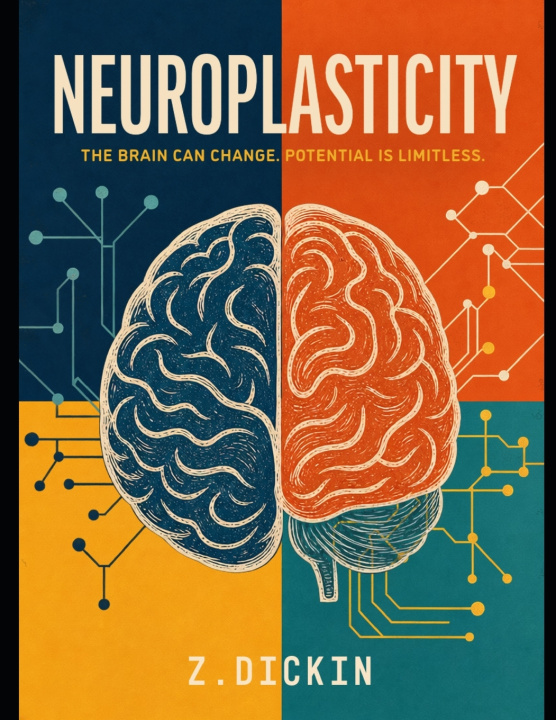
The human brain is one of the most remarkable structures in nature. For many years, scientists believed that the adult brain was relatively fixed and that its basic organization changed very little after development. Modern neuroscience has challenged this idea. The brain is now understood as a dynamic organ capable of changing its structure, function, connectivity, and organization throughout life. This remarkable capacity is known as neuroplasticity.
Neuroplasticity: The Brain's Capacity for Change, Learning, and Recovery has been written to provide a comprehensive introduction to this fascinating field. The book explores how experiences, learning, practice, environmental influences, injury, rehabilitation, lifestyle, and technological interventions can influence the nervous system.
The book begins with the fundamental principles of neuroplasticity and gradually develops toward more advanced applications. It discusses neurons, synapses, neural networks, learning, memory, sensory plasticity, motor plasticity, developmental plasticity, and plasticity following neurological injury. It also examines the relationships between neuroplasticity and sleep, nutrition, education, mental health, chronic pain, addiction, aging, and modern technology.
A major theme throughout this book is that neuroplasticity can be both adaptive and maladaptive. Neural change can support learning, recovery, and improved function, but it can also contribute to persistent pain, addiction, maladaptive habits, and other difficulties. Understanding this distinction is essential for appreciating both the opportunities and limitations of neuroplasticity.
The book also considers the practical importance of neuroplasticity in rehabilitation. Following stroke, brain injury, sensory loss, or neurological disease, surviving neural systems may reorganize and contribute to functional recovery. Rehabilitation takes advantage of principles such as repetition, meaningful practice, task-specific training, sensory feedback, motivation, and progressive challenge.
Another important message is that neuroplasticity is not unlimited. The brain does not simply "rewire itself" whenever a person wants it to. Neural change depends on biological conditions, the type and intensity of experience, age, health, environment, motivation, and many other factors. Scientific evidence must therefore be distinguished from exaggerated claims about brain enhancement.
The later chapters explore emerging technologies, including brain-computer interfaces, virtual reality, robotics, neurostimulation, artificial intelligence, and advanced brain imaging. These technologies may provide new opportunities to measure and influence neural adaptation, particularly in education and rehabilitation.
This book is intended for students, educators, researchers, healthcare professionals, and general readers who want to understand the principles of neuroplasticity. Technical concepts are explained in accessible language while maintaining a scientific perspective.
The study of neuroplasticity ultimately offers an encouraging but realistic message. The brain is capable of change, but meaningful change usually requires time, repetition, appropriate experience, and suitable biological and environmental conditions.
As research continues, our understanding of the adaptable brain will undoubtedly expand. Neuroplasticity will remain an important area of neuroscience because it connects fundamental questions about how the brain works with practical questions about how humans learn, recover, adapt, and maintain brain function throughout life.


Informace o knize
Angličtina
