
 Kontakt
 Jak nakupovat
Doručení
Nákupní rádce
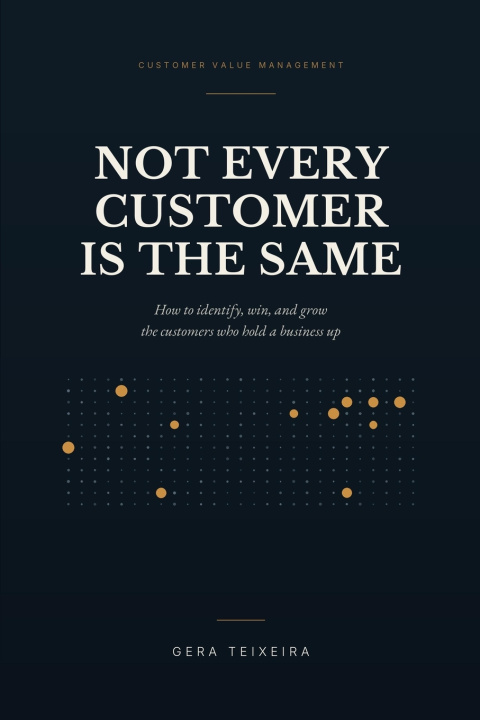
Not Every Customer Is the Same
How to Identify, Win, and Grow the Customers Who Hold a Business Up
 Angličtina
 34 b
34 b
 Nové
Nové
Až 30 dní na vrácení zboží

Two sales of ten thousand dollars enter the system on the same day, at the same amount, and they are not worth the same thing.
Most companies know their products with remarkable precision - margin by category, turnover by shelf, cost per square foot. Ask them how many of last quarter's buyers came back, and the room goes quiet. The customer base is often a company's most valuable asset, and it is also the only one that never appears on the balance sheet, is never audited, and has nobody assigned to it.
Drawing on more than fifty years across civil engineering, telecommunications, logistics, and food manufacturing and retail, Gera Teixeira writes from inside the rooms where these decisions get made - with less information than anyone would want and less time than had been promised.
This is a book about the arithmetic almost nobody does:
- Why the average customer does not exist, and what the average ticket is hiding
- How revenue can stay flat for two years while the base quietly rots
- Cost to serve, and why the largest buyers are often the least profitable
- Customer lifetime value and customer equity, calculated without pretending to a precision the data cannot support
- The base audit - nine questions, one spreadsheet, a few afternoons
- RFM: a hundred-year-old method that still offers the best return to anyone doing nothing yet
- Cohort tables, and how they expose growth that is really just faster acquisition covering faster decay
- Retention campaigns whose real cost per saved customer was fourteen times what the report showed
- Why the highest-propensity customers are usually the worst place to spend money
- CRM, artificial intelligence, and personalization, discussed without the enthusiasm that usually accompanies them
Three full case studies follow a distributor that grew into a cash crisis, a loyalty program that paid the customers who would have stayed anyway, and a family business that discovered what it was actually worth ninety days before selling.
Nothing here requires new budget, a consultant, or a system. Almost everything can begin in a spreadsheet, in one afternoon, with data the company already has and does not look at. The obstacle is rarely technological. It is the willingness to face what the numbers will show.
Exercises close every chapter. They are not academic. They are the questions the author would ask if he were sitting at the table in your company, and some of them are uncomfortable on purpose.


Informace o knize
Angličtina

Darujte tuto knihu ještě dnes
Je to snadné
1 Přidejte knihu do košíku a zvolte doručit jako dárek 2 Obratem vám zašleme poukaz 3 Kniha dorazí na adresu obdarovanéhoAhoj! Jsem Libroamiko, tvůj knižní rádce.
Jak ti můžu pomoct?