 Kontakt
 Jak nakupovat
Doručení
Nákupní rádce
 Angličtina
 148 b
148 b
Až 30 dní na vrácení zboží
Zákazníci také koupili





 /
/
 Pevná
Pevná
 1 981
Kč
1 981
Kč






 /
Brožovaná
237
Kč
/
Brožovaná
237
Kč
 /
Brožovaná
1 078
Kč
/
Brožovaná
1 078
Kč






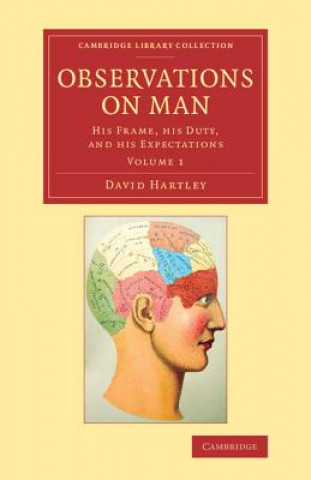
The orphaned son of an Anglican clergyman, David Hartley (1705–57) was originally destined for holy orders. Declining to subscribe to the Thirty-Nine Articles, he turned to medicine and science yet remained a religious believer. This, his most significant work, provides a rigorous analysis of human nature, blending philosophy, psychology and theology. First published in two volumes in 1749, Observations on Man is notable for being based on the doctrine of the association of ideas. It greatly influenced scientists, theologians, social reformers and poets: Samuel Taylor Coleridge, who named his eldest son after Hartley, had his portrait painted while holding a copy. In Volume 1, Hartley utilises Newtonian science in his observations. He presents a theory of 'vibrations', explaining how the elements of the nerves and brain interact as a result of stimulation, creating 'associations' and emotions.


Informace o knize
Angličtina

Darujte tuto knihu ještě dnes
Je to snadné
1 Přidejte knihu do košíku a zvolte doručit jako dárek 2 Obratem vám zašleme poukaz 3 Kniha dorazí na adresu obdarovanéhoMohlo by vás také zajímat











 /
Brožovaná
199
Kč
/
Brožovaná
199
Kč