
 Kontakt
 Jak nakupovat

Doručení
Nákupní rádce
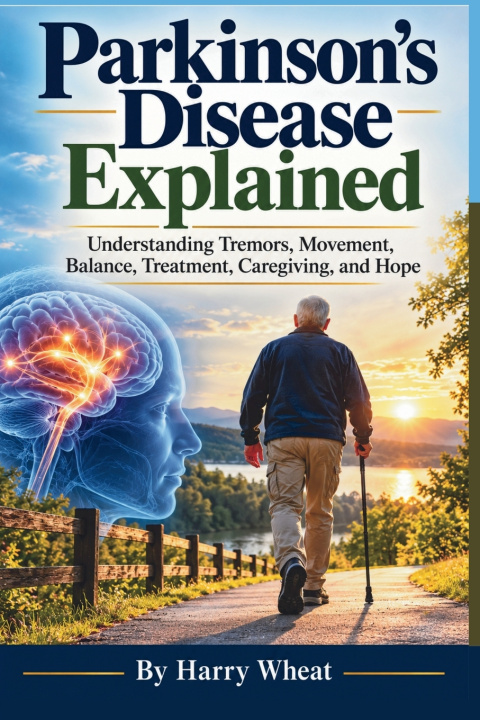
Parkinsons Disease Explained
Understanding Tremors, Movement, Balance, Treatment, Caregiving, and Hope
 Angličtina
 34 b
 Připravujeme
 Nové
Až 30 dní na vrácení zboží

Introduction
Parkinson's disease is a condition many people recognize by its most visible symptom: shaking.
But Parkinson's is much more complicated than tremor alone.
It can affect walking, balance, muscle movement, facial expression, speech, swallowing, sleep, digestion, mood, thinking, memory, blood pressure, and many other parts of everyday life.
For the person receiving the diagnosis, the amount of new information can feel overwhelming.
Questions often begin immediately.
What exactly is Parkinson's disease?
Will the shaking get worse?
Will I still be able to walk?
Can medicine help?
Will I be able to drive?
What happens if my balance gets worse?
Will I need someone to care for me?
Is there a cure?
These are important questions, and understanding the answers can make the disease feel less frightening.
That is why I wrote Parkinson's Disease Explained.
This book is designed to explain Parkinson's in straightforward language without making the subject unnecessarily complicated.
You do not need a medical degree to understand what is happening in your own body or in the life of someone you love.
Throughout this book, we will look at the major symptoms of Parkinson's, including tremor, stiffness, slowed movement, walking difficulties, and balance problems.
We will also discuss symptoms that are sometimes overlooked, such as depression, anxiety, constipation, sleep difficulties, pain, hallucinations, memory problems, and changes in blood pressure.
You will learn how Parkinson's is diagnosed and why there is not always one simple test that gives the answer.
We will discuss commonly used treatments, including carbidopa-levodopa and other Parkinson's medications, along with therapy, exercise, rehabilitation, and some advanced treatment options.
You will also learn about practical concerns.
How can a person make the home safer?
What can help when walking becomes difficult?
What happens when swallowing changes?
How can speech therapy help?
When should someone consider using a cane or walker?
How can caregivers help without taking away independence?
These questions matter because Parkinson's is not simply something that happens inside the brain.
It affects everyday life.
It can affect the person with Parkinson's, their spouse, children, relatives, friends, and caregivers.
For that reason, this book is written not only for people who have Parkinson's disease but also for the people who care about them.
One of the most important things to understand is that Parkinson's affects everyone differently.
There is no single Parkinson's journey.
One person may have a noticeable tremor but continue walking well for many years.
Another may have little tremor but experience significant stiffness and slowness.
Some people develop memory or thinking problems.
Others may not.
Some respond extremely well to medication.
Others require several adjustments before the right treatment plan is found.
This variation is why medical care must be individualized.
This book cannot tell any one person exactly what will happen in the future.
No book can.
What it can do is help you understand the possibilities, recognize changes, and know what questions to ask.
Another important message runs throughout these chapters:
A person with Parkinson's is still a person first.
A diagnosis does not erase someone's personality, history, relationships, dreams, faith, or value.
A person may move more slowly and still have much to contribute.
They may need help walking and still make their own decisions.


Informace o knize
Angličtina

Darujte tuto knihu ještě dnes
Je to snadné
1 Přidejte knihu do košíku a zvolte doručit jako dárek 2 Obratem vám zašleme poukaz 3 Kniha dorazí na adresu obdarovanéhoAhoj! Jsem Libroamiko, tvůj knižní rádce.
Jak ti můžu pomoct?