
 Kontakt
 Jak nakupovat
Doručení
Nákupní rádce
 Angličtina
 67 b
67 b
30 dní na vrácení zboží

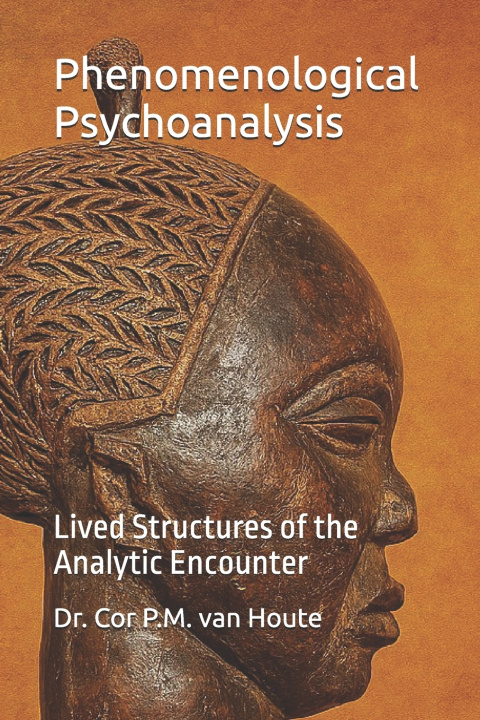
Psychoanalysis, born at the crossroads of medicine, philosophy, and cultural critique, has from its inception wrestled with questions that are not only clinical but epistemological: What does it mean to know the human psyche? What is the status of the analyst's knowledge? Is it interpretation, construction, or something irreducibly experiential? For more than a century, psychoanalysis has attempted to respond to these questions, often through theoretical elaborations or empirical studies, yet rarely has it granted phenomenology-the rigorous science of lived experience-the place it deserves as a coequal partner in this inquiry.
This book arises from the conviction that psychoanalysis requires a renewed grounding in phenomenology if it is to speak with clarity to the scientific and cultural challenges of our time. The alliance is not accidental. Both disciplines share a preoccupation with experience as lived rather than abstracted, with subjectivity as enacted rather than merely explained. If Freud provided the first sustained mapping of psychic life in terms of unconscious forces, Husserl, Merleau-Ponty, and others offered a method for describing experience without reducing it to the categories of natural science. Where psychoanalysis seeks to bring to speech that which resists articulation, phenomenology seeks to disclose what is presupposed yet unthematized in the texture of experience. Their encounter is therefore not a mere juxtaposition but an unfinished dialogue-one that promises to enrich both.
The chapters that follow are structured to develop this dialogue in a systematic way. The early sections establish the epistemological and methodological foundations: how phenomenology reframes psychoanalysis not as an explanatory but as a descriptive and interpretive science, and how analytic practice can be rethought in terms of first-person and intersubjective data. From there, the book turns to the structures of lived experience most salient to the analytic encounter: the pre-reflective bodily field, the temporality of the analytic hour, the atmosphere of the consulting room, the rhythms of silence and speech, the vicissitudes of transference and countertransference, and the delicate moments of rupture, repair, and transformation. Each topic is pursued not only conceptually but also in terms of lived examples that demonstrate how phenomenological description illuminates the otherwise opaque dynamics of analytic work.
For the practicing analyst, the implications are profound. A phenomenological sensibility sharpens attention to the subtleties of presence, gesture, silence, and temporality that often escape the interpretive frameworks of traditional theory. It encourages a mode of listening that is less about deciphering hidden meanings and more about dwelling with the patient's world as it unfolds. For the philosopher, this dialogue offers a new terrain where classical phenomenological concerns-embodiment, temporality, intersubjectivity-are tested against the density of clinical reality. For both communities, the book seeks to demonstrate that phenomenology is not a theoretical garnish to psychoanalysis but a method that can transform how its practice is understood and enacted.
At the same time, this work acknowledges the limits and risks of its project. Phenomenology does not provide ready-made solutions to analytic dilemmas, nor does it replace the interpretive richness of psychoanalytic theory. Rather, it offers a discipline of attention-a way of holding open the space where phenomena can show themselves before being subsumed into theory. In a time when psychoanalysis often feels pressured to justify itself in empirical or neuroscientific terms, the phenomenological approach restores confidence in what is unique to the analytic enterprise: its commitment to the irreducibility of lived human experience.
Dr. Cor P.M. van Houte


Informace o knize
Angličtina
Kategorie

Darujte tuto knihu ještě dnes
Je to snadné
1 Přidejte knihu do košíku a zvolte doručit jako dárek 2 Obratem vám zašleme poukaz 3 Kniha dorazí na adresu obdarovanéhoAhoj! Jsem Libroamiko, tvůj knižní rádce.
Jak ti můžu pomoct?