
 Kontakt
 Jak nakupovat
Doručení
Nákupní rádce
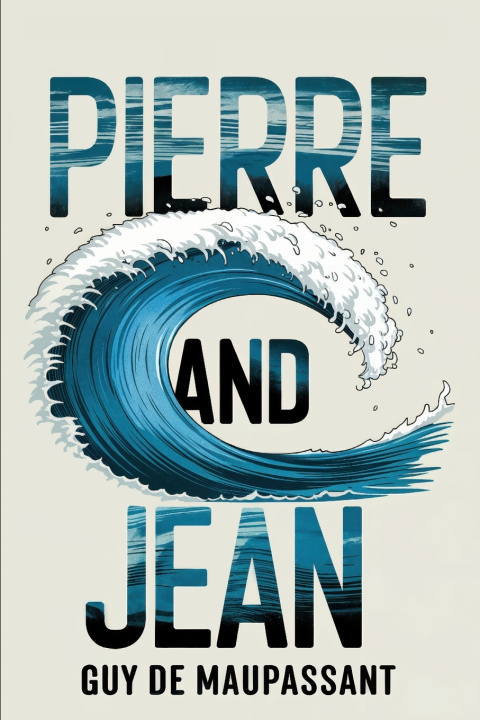
Pierre and Jean
 Angličtina
 26 b
26 b
Až 30 dní na vrácení zboží

When Jean Roland inherits a substantial fortune from a deceased family friend, his brother Pierre begins asking uncomfortable questions. Why would Léon Maréchal leave everything to Jean while giving Pierre nothing? As Pierre reconstructs the past-calculating dates, remembering his mother's relationship with Maréchal, observing Jean's features-terrible suspicion forms: Jean is Maréchal's son, the product of adultery.
Guy de Maupassant published Pierre and Jean in 1888, his fourth novel and by consensus his finest. He stripped away everything extraneous, creating a work as economical as his legendary short stories but with the psychological development only sustained fiction permits. What emerges is psychological thriller where the suspense isn't whether Pierre's suspicion is correct but what he will do once certainty replaces doubt.
The novel tracks Pierre's crisis with clinical precision: jealousy of Jean's fortune, rage at his mother's deception, impulse to expose warring with recognition that exposure benefits no one, self-loathing at his own vindictiveness. Madame Roland receives equally penetrating treatment-her terror when she realizes Pierre suspects, her attempts to protect Jean, her deterioration as crisis intensifies. Maupassant never confirms the affair explicitly, but her behavior provides all necessary confirmation.
Jean remains innocent, genuinely unaware of his parentage, puzzled by Pierre's hostility. The father stays obtuse, either ignorant or willfully blind, cheerfully celebrating Jean's fortune while his family fractures. These psychological dynamics play out against Le Havre's provincial respectability-the Rolands are petit bourgeois, former shopkeepers concerned with appearances and advancement.
Maupassant published the novel with his important essay "The Novel" defending psychological realism. Events matter less than their effects on consciousness. The "action" is minimal: inheritance announced, tensions escalating, Pierre's eventual departure. What fills pages is Pierre's obsessive thinking, his alternation between rage and guilt, his recognition of his own meanness even as he cannot control it.
The resolution is deliberately ambiguous. Pierre escapes by becoming ship's doctor; he doesn't overcome jealousy or achieve acceptance-he flees. The family secret remains secret because the one who knows has left. Jean continues ignorant. The parents maintain appearances. Yet Pierre's absence testifies to irreparable damage. No easy answers, no moral clarity, no redemption-just naturalist conviction that some truths destroy more than they illuminate.
Should Pierre tell Jean a truth Jean has right to know but which will devastate him? Should he protect his mother or demand accountability? The novel refuses moral guidance, presenting questions in all their difficulty. Pierre's intelligence allows him to read evidence correctly, but this capability brings no happiness. Jean's dullness protects him from Pierre's suffering. Clarity becomes curse rather than blessing.
At under 200 pages, the novel's brevity intensifies its psychological power. Maupassant wastes nothing-every scene advances crisis, dialogue reveals character and tension simultaneously. This economy distinguishes it from expansive naturalist novels, proving psychological analysis can operate at concentrated scale.
Essential Maupassant: controlled, psychologically acute, honest about family secrets' destructive potential and truth's costs. Not uplifting or redemptive, but powerful in its refusal of comfort.


Informace o knize
Angličtina

Darujte tuto knihu ještě dnes
Je to snadné
1 Přidejte knihu do košíku a zvolte doručit jako dárek 2 Obratem vám zašleme poukaz 3 Kniha dorazí na adresu obdarovanéhoAhoj! Jsem Libroamiko, tvůj knižní rádce.
Jak ti můžu pomoct?