
 Kontakt
 Jak nakupovat
Doručení
Nákupní rádce
 Angličtina
 371 b
371 b
Až 30 dní na vrácení zboží
Zákazníci také koupili

















 /
/
 Brožovaná
 437
Kč
437
Kč


 /
Brožovaná
720
Kč
/
Brožovaná
720
Kč

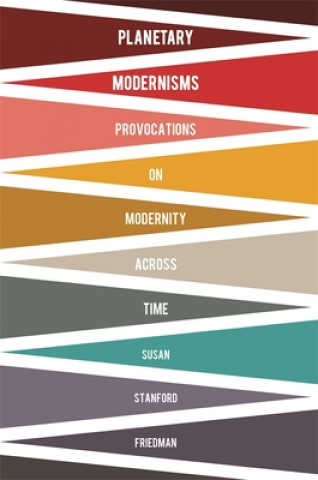
Drawing on a vast archive of world history, anthropology, geography, cultural theory, postcolonial studies, gender studies, literature, and art, Susan Stanford Friedman recasts modernity as a networked, circulating, and recurrent phenomenon producing multiple aesthetic innovations across millennia. Considering cosmopolitan as well as nomadic and oceanic worlds, she radically revises the scope of modernist critique and opens the practice to more integrated study. Friedman moves from large-scale instances of pre-1500 modernities, such as Tang Dynasty China and the Mongol Empire, to small-scale instances of modernisms, including the poetry of Du Fu and Kabir and Abbasid ceramic art. She maps the interconnected modernisms of the long twentieth century, pairing Joseph Conrad with Tayeb Salih, E. M. Forster with Arundhati Roy, Virginia Woolf with the Tagores, and Aim C saire with Theresa Hak Kyung Cha. She reads postcolonial works from Sudan and India and engages with the idea of N gritude. Rejecting the dominant modernist concepts of marginality, othering, and major/minor, Friedman instead favors rupture, mobility, speed, networks, and divergence, elevating the agencies and creative capacities of all cultures not only in the past and present but also in the century to come.


Informace o knize
Angličtina

Darujte tuto knihu ještě dnes
Je to snadné
1 Přidejte knihu do košíku a zvolte doručit jako dárek 2 Obratem vám zašleme poukaz 3 Kniha dorazí na adresu obdarovanéhoMohlo by vás také zajímat






 /
Brožovaná
166
Kč
/
Brožovaná
166
Kč
 /
Brožovaná
979
Kč
/
Brožovaná
979
Kč











 /
Pevná
12 480
Kč
/
Pevná
12 480
Kč
 /
Brožovaná
2 646
Kč
/
Brožovaná
2 646
Kč
Ahoj! Jsem Libroamiko, tvůj knižní rádce.
Jak ti můžu pomoct?