
 Kontakt
 Jak nakupovat
Doručení
Nákupní rádce
 Angličtina
 24 b
24 b
30 dní na vrácení zboží

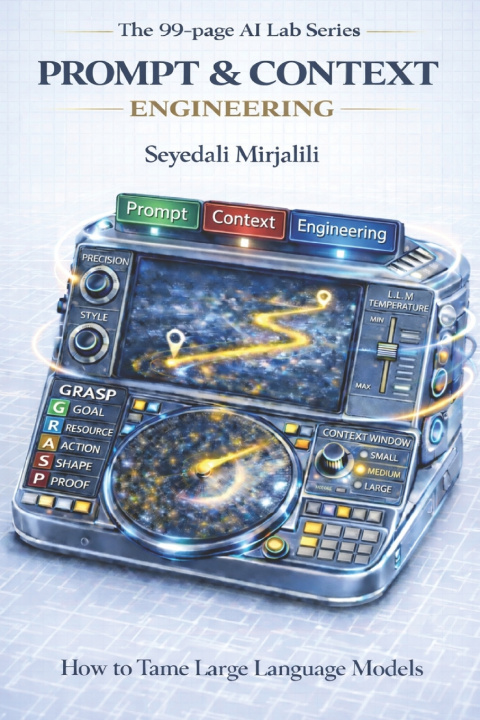
Large Language Models can sound confident even when they're wrong. The real skill isn't asking nicer questions-it's learning how to specify your goal, provide the right evidence, and lock in an output you can actually trust.
In Prompt & Context Engineering, Prof. Seyedali Mirjalili teaches a practical "Navigator" mental model: the model will always give you a route... but if your destination is vague or your map (context) is incomplete, it will confidently guess. This book shows you how to prevent that-fast.
What you'll learn (with copy/paste templates + exercises)Why outputs drift, hallucinate, and break constraints-and how to control it
The key control knobs (strict vs creative mode) for consistency vs variety
How to turn vague requests into clear specifications (Goal + Constraints + Shape)
GRASP: a reusable framework to build prompts that behave predictably
Few-shot examples, intermediate steps, and output contracts (format = control)
How to debug prompts like code (reduce "prompt roulette")
Context engineering that makes answers grounded: Context Packs, long-chat hygiene, and RAG (retrieval-augmented generation)
Safety essentials: prompt injection, untrusted text, and "trust, but verify" habits
Professionals using ChatGPT/LLMs for real work (writing, analysis, teaching, planning)
Educators and students who want repeatable outputs-not surprises
Builders designing assistants that must follow rules and use evidence
If you want your prompts to stop "sort of working" and start working on purpose, this is your lab. Finish it in a weekend-then use the templates forever.
Part of The 99-Page AI Lab series, this book compresses the essentials into a focused, hands-on sprint built for self-learners, busy practitioners, and students who want mastery without textbook bloat. You'll learn how to think like an optimizer: how to define the knobs you can control, what "better" truly means, how to respect real-world limits, and how to choose an algorithm family that matches the problem in front of you.


Informace o knize
Angličtina
