
 Kontakt
 Jak nakupovat
Doručení
Nákupní rádce
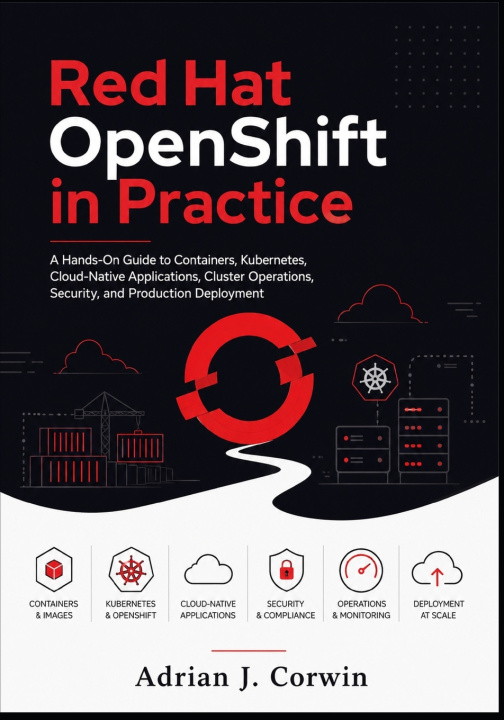
Red Hat OpenShift in Practice
A Hands-On Guide to Containers, Kubernetes, Cloud-Native Applications, Cluster Operations, Security, and Production Deployment
 Angličtina
 53 b
53 b
 Připravujeme
 Nové
Nové
Až 30 dní na vrácení zboží

Many engineers can get a container running on OpenShift. Fewer can explain why the Pod landed where it did, how traffic reaches it, what happens when a node fails, or how to recover when a deployment introduces a defect. Documentation and short tutorials often teach isolated commands. Production work demands something deeper: an understanding of OpenShift as an integrated enterprise platform built on Kubernetes.
Red Hat OpenShift in Practice bridges that gap. It takes readers from containers and Kubernetes foundations through the full operational life of cloud-native applications on OpenShift deployment, networking, storage, security, scaling, delivery automation, observability, Operators, cluster lifecycle, and production operations.
The book is written for practitioners who need more than a getting-started guide. It serves DevOps engineers, platform engineers, SREs, cloud and infrastructure engineers, Linux administrators, application developers working with containers, and Kubernetes practitioners transitioning to OpenShift. Newcomers receive the conceptual grounding required to follow the material. Experienced Kubernetes users gain a clear view of what OpenShift adds and how its architecture, security model, networking, and day-two services change real operational practice.
Rather than presenting OpenShift as a collection of features or console clicks, the material follows a consistent progression: concept, architecture, mechanism, implementation, verification, operations, and troubleshooting. Readers learn not only how to deploy a workload, but how the control plane, scheduler, network, storage, and security controls interact; how to expose applications securely; how to design and diagnose networking paths; how to manage persistent and stateful workloads; how to implement identity, RBAC, and workload constraints; how to scale both applications and cluster capacity; how to build modern CI/CD and GitOps workflows; how to interpret metrics, logs, and events; and how to troubleshoot failures systematically.
Special attention is given to the realities that appear after an application first starts successfully. Security, multi-tenancy, network isolation, storage durability, availability under failure, observability, automated delivery, Operator-based lifecycle management, upgrades, backup, recovery, and governance are treated as core engineering concerns rather than advanced afterthoughts. The goal is competence in operating OpenShift environments, not merely the ability to launch containers.
OpenShift and the surrounding cloud-native ecosystem continue to evolve. Commands, APIs, and interfaces change. The durable value of this book lies in the architectural and operational mental models it develops models that remain useful as versions advance and as environments grow more complex.
Whether the task is deploying the first multi-component application, securing a multi-tenant platform, diagnosing a production networking failure, planning a cluster upgrade, or designing a repeatable delivery pipeline, Red Hat OpenShift in Practice equips readers to understand the system, reason about its behavior, and operate it with confidence.


Informace o knize
Angličtina

Darujte tuto knihu ještě dnes
Je to snadné
1 Přidejte knihu do košíku a zvolte doručit jako dárek 2 Obratem vám zašleme poukaz 3 Kniha dorazí na adresu obdarovanéhoAhoj! Jsem Libroamiko, tvůj knižní rádce.
Jak ti můžu pomoct?