
 Kontakt
 Jak nakupovat
Doručení
Nákupní rádce
 Angličtina
 41 b
41 b
Až 30 dní na vrácení zboží
Zákazníci také koupili




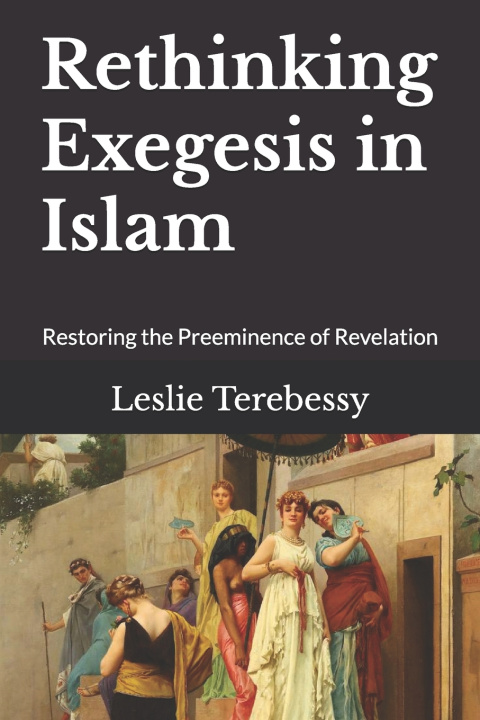
Islam is being taken to task. Apart from attributing acts of terror to Muslims, Islam itself is portrayed as "violent." A part of this is dues to Islamophobia, However, problematic exegesis also plays a part in attributing a problematic reputation to Islam. The perception of Islam as a harsh faith is due in part to the "extreme" punishments in the sharia, not warranted by revelation. The sharia, unlike revelation, is a product of worldly effort. Shariah was not "revealed." It was "constructed." The Book of Allah was revealed. The traditions and the writings of jurists were "added." These are not "revelation." To ascribe sacredness to the sharia is to ascribe an unwarranted rank to it. The treatment of tradition as revelation resulted from recourse to problematic presuppositions and practices. The unwarranted presuppositions encompass the characterisation of using reason to understand revelation as kufr, the perception that revelation is "unclear," that it features "contradictions" and that tradition is "revelation." The perceptions that the Book of Allah features "unclear" verses was used to justify recourse to traditions to "clarify" and "detail" the Book of Allah. The allegation that the Book of Allah features "contradictory" verses was used to justify recourse to the teaching of abrogation. Both perceptions require re-assessment. The reticence to use reason corrupted the knowledge of revelation as well as penal legislation. A few aberrations - in particular treatment of blasphemy, apostasy and adultery, explain the harshness of the law. These and related aberrations were due to the repression of reason and the treatment of tradition as revelation. Tradition began to vie with revelation for the allegiance of the faithful. To discredit reason as a means of accessing revelation, its use was characterised as kufr. To bolster its prospects of acceptance, tradition was portrayed as "revelation." Few asked in what way was tradition "equal" to revelation when Allah has no "equals." Its mediation between a person and revelation was based on the perception that revelation should be approached through tradition. In different words, tradition asserted the right to "explain," "judge" and "abrogate" revelation. The superiority of tradition in relation to revelation was expressed in the axiom that "tradition judges revelation" and in the perception that "revelation requires tradition more than tradition requires revelation." Tradition became the gatekeeper of revelation admitting exclusively those willing to prostrate themselves to tradition, excluding all who rejected it as "heretics," even "permitting" or counselling their "eradication." This is the perception of extremists. Tradition emerged posing as revelation. It ushered in "traditional" Islam, presenting itself as "authentic" Islam. Assessment reveals, however, that what passes for "traditional" Islam is not as "traditional" as appears at first, if by "traditional" we refer to the Islam practiced by the prophet. The treatment of tradition as "revelation" is problematic, as it encroaches upon the pre-eminence of revelation. Unfortunately, as an effect of the atrophy of reasoning, the treatment of tradition as a second revelation does not strike the adherents of traditions as problematic. The treatment of tradition as revelation began with the requests by Hisham, Umar II and al-Mansur to record the prophetic traditions. The treatment of tradition as revelation was aided by the disparagement of reason. Persons who refrain from using their reason are unlikely to question the audacity entailed by the treatment of tradition as revelation. The disparagement of reasoning was part of a response to what was perceived as "unIslamic" knowledge, in particular the efforts of philosophers. The spectre of unIslamic knowledge haunts Muslims to the present time.


Informace o knize
Angličtina

Darujte tuto knihu ještě dnes
Je to snadné
1 Přidejte knihu do košíku a zvolte doručit jako dárek 2 Obratem vám zašleme poukaz 3 Kniha dorazí na adresu obdarovanéhoAhoj! Jsem Libroamiko, tvůj knižní rádce.
Jak ti můžu pomoct?