
 Kontakt
 Jak nakupovat
Doručení
Nákupní rádce
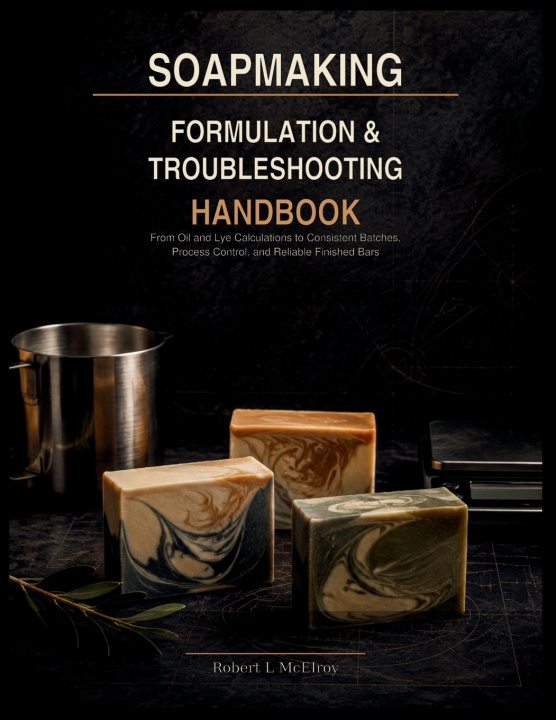
Soapmaking Formulation & Troubleshooting Handbook
From Oil and Lye Calculations to Consistent Batches, Process Control, and Reliable Finished Bars
 Angličtina
 92 b
92 b
 Nové
Nové
Až 30 dní na vrácení zboží

A batch that seizes in the pot, crumbles after cure, or blooms with orange spots six months later is not a mystery - it has a specific, traceable cause. This handbook teaches you to calculate that cause yourself, and gives you a dedicated encyclopedia to diagnose it the moment it happens.
Most soapmaking books teach you to follow one recipe. This one teaches the chemistry underneath every recipe - SAP value, superfat, lye concentration, fatty-acid contribution - so you can formulate, substitute, and fix a batch on purpose instead of guessing. Organized in six parts and twenty-two chapters, it works both as a start-to-finish course and as a shelf reference.
Formulation science, built from the fatty acids up
- The seven fatty acids behind every bar's hardness, cleansing, conditioning, and lather character, plus profiles for close to forty soaping oils and fats
- The core lye formula applied oil-by-oil across a real multi-oil blend, with NaOH vs. KOH explained and why they're never interchangeable at the same weight
- Two water-calculation methods, water discounting, and a full chapter on what SAP value and superfat physically represent
- Cold process and hot process covered step by step, plus trace, gel phase, mold and pour technique, six named swirl techniques, and specialty soaps (liquid, shaving, salt, cream)
A troubleshooting encyclopedia, organized by defect
- Appearance defects: soda ash, ricing, seizing, false trace
- Structural and texture defects: crumbly or soft bars, cracking, glycerin rivers, sweating
- Cure, shelf-life, and chemical defects: Dreaded Orange Spots, shrinkage, warping, humidity softening
- A fast symptom-to-fix chart, a "look-alike pairs" guide, and Mistake Autopsy boxes for thirteen named problems
Every chapter opens with Learning Objectives and closes with a Self-Check and answer-keyed Practice Problems; Worked Examples carry real numbers start to finish. Six appendices - a master SAP value table, lye-calculation quick reference, the troubleshooting chart, blank recipe and batch-record templates, a glossary, and a safety/PPE reference - back the whole book at the bench. Part VI covers scaling a batch, record-keeping, and labeling/regulatory basics for a maker moving toward small-batch production.
Who this is for: a home or small-batch soapmaker who wants to formulate from real chemistry instead of a fixed recipe card, and who wants a specific, traceable cause - not a guess - the moment a batch goes wrong.
This handbook is education and reference. Sodium hydroxide and potassium hydroxide are corrosive. Always verify every formula with a trusted lye calculator and your current jurisdiction's safety, cosmetic, and labeling rules before mixing, selling, or gifting soap.


Informace o knize
Angličtina

Darujte tuto knihu ještě dnes
Je to snadné
1 Přidejte knihu do košíku a zvolte doručit jako dárek 2 Obratem vám zašleme poukaz 3 Kniha dorazí na adresu obdarovanéhoAhoj! Jsem Libroamiko, tvůj knižní rádce.
Jak ti můžu pomoct?