
 Kontakt
 Jak nakupovat
Doručení
Nákupní rádce
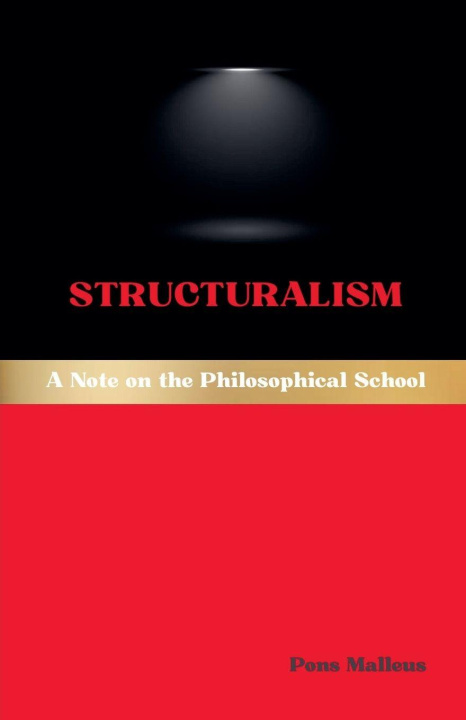
Structuralism
 Angličtina
 29 b
29 b
30 dní na vrácení zboží

This book is an exploration into one of the most influential, yet often misunderstood, movements in 20th-century philosophy and human sciences: structuralism. Born from the crossroads of linguistics, anthropology, psychoanalysis, and literary theory, structuralism is less a rigid doctrine than a mode of inquiry-a way of seeing the world that privileges systems, relationships, and structures over isolated elements. Its central premise is deceptively simple: the meanings we assign to things, ideas, and experiences do not arise from their intrinsic nature, but from their position within a larger system. Whether that system is language, myth, culture, or society, structuralism urges us to shift our focus from the individual unit to the network of relations that make that unit intelligible.
This shift has far-reaching consequences. It compels us to reconsider what it means to understand a text, a ritual, or even a self. It challenges the romantic ideal of the autonomous subject, calling into question the notion of individual creativity or originality as the ultimate source of meaning. It proposes that human thought itself is shaped-and perhaps constrained-by the deep structures that underlie culture and language. Structuralism, in this way, is both a method and a worldview. It is a lens through which we can interpret the complexity of human life, not by tracing origins or intentions, but by revealing the hidden architectures that organize experience.
The roots of structuralism are most often traced to the work of Swiss linguist Ferdinand de Saussure, who revolutionized the study of language by proposing that meaning arises not from a direct relationship between words and things, but from the differential relations between signs within a system. This insight would be adopted and expanded by thinkers such as Claude Lévi-Strauss in anthropology, Roland Barthes in literary theory, Jacques Lacan in psychoanalysis, and Michel Foucault in epistemology. Each of these figures, in their own domain, demonstrated how human phenomena-be they kinship systems, narratives, unconscious desires, or systems of knowledge-could be understood as structured wholes governed by underlying rules and oppositions.
Yet structuralism is not without its critics. From its very inception, it sparked debates about determinism, agency, and the possibility of change. The rise of post-structuralism in the late 20th century marked both a continuation and a critique of structuralist thought, emphasizing instability, multiplicity, and the limits of totalizing systems. Still, many of the questions raised by structuralism remain vital today. In an era of big data, algorithmic logic, and global networks, structuralist approaches offer valuable tools for interpreting complex systems and patterns that shape contemporary life.
This book does not aim to be an exhaustive history of structuralism, nor does it present a unified theory. Instead, it offers a guided tour through its central concepts, thinkers, and debates. Each chapter focuses on a key domain-language, culture, mind, literature, and power-showing how structuralist methods have reshaped our understanding of each. Along the way, the reader will encounter both foundational texts and critical reassessments, encouraging a balanced view of structuralism's legacy.
Ultimately, this book is intended for readers curious about how we make meaning and how that meaning is structured-by language, by culture, by unconscious processes, and by systems larger than ourselves. Structuralism asks us to see the familiar in unfamiliar ways, to find order where we assumed chaos, and to question the givenness of the world around us. In that spirit, this preface serves not as a conclusion, but as an invitation: to think structurally, to read deeply, and to see what lies beneath the surface.


Informace o knize
Angličtina
