Doprava zdarma při nákupu nad 1 499 Kč přes Zásilkovnu nebo PPL Box.

Staňte se součástí komunity milovníků knih z celého světa a získejte hromadu výhod.
Založit účet zdarma
Doprava zdarma se Zásilkovnou nad 1 499 Kč
Kurýr DPD 69 Kč
PPL shop 49 Kč
Balíkovna 69 Kč
PPL kurýr 74 Kč
PPL box 39 Kč
Balíkovna 49 Kč
Výdejní místo DPD 49 Kč
Zásilkovna 39 Kč
 Kontakt
 Jak nakupovat
Pomoc
Doručení
Kurýr DPD 69 Kč
PPL shop 49 Kč
Balíkovna 69 Kč
PPL kurýr 74 Kč
PPL box 39 Kč
Balíkovna 49 Kč
Výdejní místo DPD 49 Kč
Zásilkovna 39 Kč
Doprava zdarma se Zásilkovnou nad 1 499 Kč
Nákupní rádce
Jsme tu pro vás!
571 999 090
Můj účet
▸
Prázdný :-(
0
Doprava zdarma při nákupu nad 1 499 Kč přes Zásilkovnu nebo PPL Box.
Jazyk
 Angličtina
Angličtina
Kniha
Brožovaná
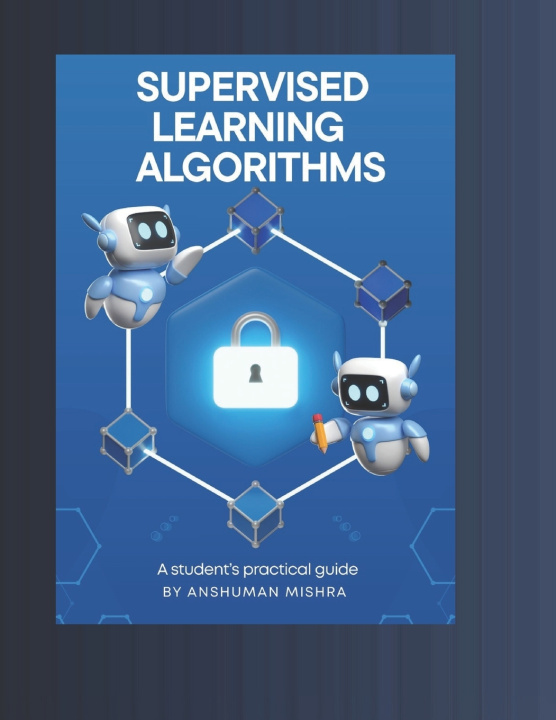
Overview: What This Book Offers"Supervised Learning Algorithms: A Student's Practical Guide" is desi...
Celý popis
Libristo kód: 50715955
?
 36 b
36 b
36 b
362
Kč
Skladem u dodavatele
Odesíláme za 9-15 dnů
30 dní na vrácení zboží

Overview: What This Book Offers
"Supervised Learning Algorithms: A Student's Practical Guide" is designed to be a complete, student-friendly resource spanning from fundamentals to real-world applications. It blends solid theory, intuitive explanation, hands-on practice, and deep reflections on ethical and future directions in machine learning.
Why This Book Matters: Benefits of Study
1. Accurate, Reliable Predictions
Supervised learning trains models using labeled data, empowering them to make precise, dependable predictions once they're well-trained .2. Clarity and Interpretability
Many algorithms-like linear regression and decision trees-are transparent and easy to interpret. This clarity is especially vable in domains like education, healthcare, or finance, where understanding model decisions is critical ..3. Wide-Ranging Applicability
From discovering spam emails to forecasting housing prices, supervised learning spans classification and regression tasks and touches nearly every industry-healthcare, finance, tech, agriculture, climate science, robotics, and more .4. Practically Accessible for Students
Its structured nature-train on labeled data, test, iterate-makes supervised learning ideal for learners. Simple yet powerful, it's accessible for beginners using intuitive models, and expandable toward advanced techniques like neural networks over time .5. Enhances Critical Thinking and Creativity
Working with real-world datasets and building predictive models fosters analytical thinking and creativity-skills highly valued in academics and industry .6. Automates and Scales Tasks
Supervised models can automate repetitive tasks-like grading assignments or detecting fraudulent transactions-freeing time and energy for more complex, human-driven work .7. Supports Active and Adaptive Learning
Educational systems powered by supervised learning enable personalized instruction and adapt in real time-improving learning outcomes and engagement.How This Book Facilitates Learning
Structured Learning Approach
- Clear progression from foundational math to advanced models, tuned with your preferred "Chapter-X / X.X" structure for clarity and easy navigation.
- Foundations (Chapters 1-2) ensure students build competency before diving deeper.
Balanced Theory and Practical Application
- Each concept is explained theoretically and reinforced with intuitive, accessible examples.
- Hands-on Python exercises using libraries like scikit-learn make learning practical and code-first.
Algorithmic Breadth
- Covers essential models: regression and classification basics, ensemble methods, boosting (XGBoost / LightGBM), and hyperparameter tuning.
- Encourages experimentation and a deep understanding of model behavior.
Model Evation and Best Practices
- Teaches rigorous evation using metrics (accuracy, precision, F1-score), validation strategies, ROC/AUC understanding, and discussions on overfitting vs. generalization.
- Also addresses ethical AI, model interpretability, and fairness concerns.
Case Studies and Real Projects
- In-depth projects: housing price prediction, spam filtering, churn analysis, handwriting recognition.
- Hands-on experience is supplemented with dataset access, real-world insights, and optional competitions or extension ideas.
Future-Focused Discussions
- Covers current trends and research, interpretability, ethical considerations, and explores how supervised learning fits into the evolving landscape of AI.
Herečka
&
Polyglotka
EWA KASP
pro
Přehrát video


Libristo má největší výběr cizojazyčné literatury. Proto své knihy kupuji tady.
Informace o knize
Plný název
Supervised learning Algorithms
Autor
Anshuman Mishra
Jazyk
Angličtina
Angličtina
Vazba
Kniha - Brožovaná
Datum vydání
2025
Počet stran
168
EAN
9798297784673
Libristo kód
50715955
Nakladatelství
Independently published
Váha
406
Rozměry
216 x 280 x 9
