
 Kontakt
 Jak nakupovat
Doručení
Nákupní rádce
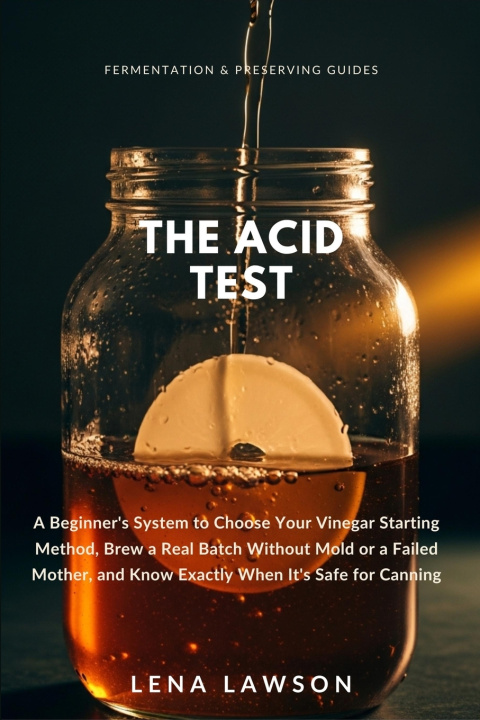
The Acid Test
A Beginner's System to Choose Your Vinegar Starting Method, Brew a Real Batch Without Mold or a Failed Mother, and Know Exactly When It's Safe for Canning
 Angličtina
 33 b
33 b
 Připravujeme
 Nové
Nové
Až 30 dní na vrácení zboží

I nearly poured an entire batch of apple scrap vinegar down the drain because of a jellyfish.
That's the only way to describe what was floating in the jar: a pale, rubbery, translucent disc that appeared in week two. My instinct said contamination. It turned out I was holding a mother of vinegar, the single most productive and most misunderstood object in this entire hobby, and I almost threw mine away because no book had shown me a picture of what success actually looks like before it looks like finished vinegar.
That gap is why this book exists. Most vinegar guides fall into one of two unhelpful categories: dense, encyclopedic references written for people who already keep a crock going and want their sixtieth flavor variation, or thin, single-ingredient pamphlets that cover apple cider vinegar and nothing else. Almost none of them tell you, in plain language, which starting method actually fits your kitchen, show you what mold versus a healthy mother really looks like, or explain the one safety question that eventually stops every home vinegar maker cold: is this safe for canning?
This book answers all three. You'll start with an honest decision framework that matches your situation, whether that's a counter full of apple cores, a bottle of wine gone flat, or a willingness to order a starter online, to the method that will actually work for you. You'll get three separate first-batch walkthroughs, not one recipe stretched to cover everything. You'll get a dedicated visual guide to tell mold from a healthy mother on sight. And you'll get a full chapter on the acidity question, the one place where enthusiasm and food safety can quietly work against each other if nobody explains the difference between vinegar that's plenty sour for your salad dressing and vinegar that's verified safe for canning.
Inside, you'll find:
- A four-question decision framework for choosing between the mother method, the scrap method, and the leftover alcohol method, before you buy a single ingredient
- Complete, separate first-batch walkthroughs for each method, start to finish
- A dedicated visual guide to tell true mold from a healthy, developing mother, by texture and smell, not guesswork
- A full symptom-organized troubleshooting chapter: nothing's happening, smells off, too weak, too harsh
- The one real safety chapter in this hobby: exactly why homemade vinegar isn't automatically canning-safe, and what to do about it
- A continuous-crock chapter for turning one good batch into an ongoing, low-maintenance supply
- Flavoring, infusing, and branching out beyond apples into wine, berries, honey, and more
- Real cost breakdowns, a seasonal calendar, and a full glossary of vinegar terms
You do not need a chemistry background, a wine cellar, or any specialty equipment to start. You need a clean jar, something with sugar or alcohol in it, and a book that tells you what you're actually looking at when things start to happen in that jar. This is the fifth title in the Fermentation & Preserving Guides series, built for beginners who want to start their first batch with confidence instead of second-guessing every jellyfish-looking thing that shows up on top.


Informace o knize
Angličtina

Darujte tuto knihu ještě dnes
Je to snadné
1 Přidejte knihu do košíku a zvolte doručit jako dárek 2 Obratem vám zašleme poukaz 3 Kniha dorazí na adresu obdarovanéhoAhoj! Jsem Libroamiko, tvůj knižní rádce.
Jak ti můžu pomoct?