
 Kontakt
 Jak nakupovat
Doručení
Nákupní rádce
 Angličtina
 44 b
44 b
 Nové
Nové
Až 30 dní na vrácení zboží

Deception is rarely as simple as a lie.
At times, the words are true.
At other times, nothing is said.
In some cases, the truth arrives too late.
In other cases, the person deceiving you has convinced themselves that they are still being honest.
And in some instances, the most important thing about deception is not what someone says, but what becomes possible because of what they do not say.
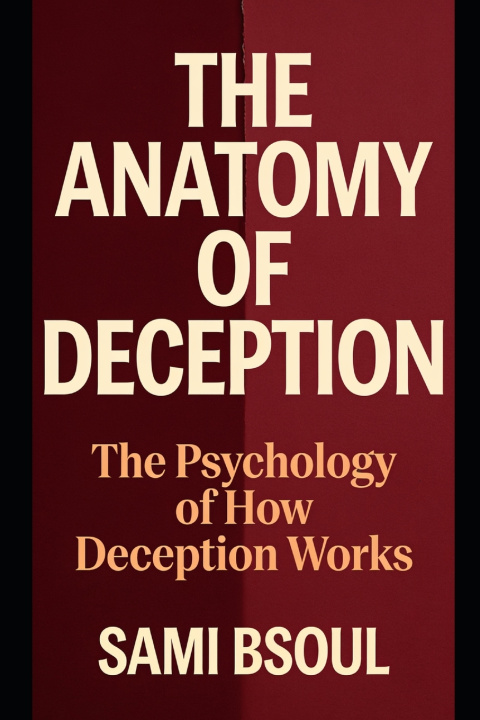
The Anatomy of Deception is a psychological examination of what happens when truth, desire, fear, self-protection, and human relationships collide.
It is about the strange distance between what is said and what is understood. Between what someone knows and what they are willing to let another person know. Between the story a person tells and the reality that story creates.
Because deception is not always a deliberate lie. It can be a choice. A silence. A delay. A technically true answer. A carefully limited truth. A feeling that changes the subject. A justification that makes the unacceptable feel reasonable... and sometimes, it begins long before another person is deceived.
It begins inside the person who needs the deception to be true.
That is what makes deception so difficult to understand.
The deceiver is not always a villain.
The deceived is not always naïve.
And the truth is not always hidden behind a false statement.
Human beings are remarkably capable of protecting what they want while preserving the belief that they are still good, reasonable, honest people.
That is where deception becomes psychologically fascinating.
Because the deepest forms of deception do not always ask you to believe something completely false.
They only need you to remain unaware of something that would change how you understand what is happening.
And once you understand that, ordinary conversations begin to look different.
Not because everyone is lying.
Because human communication is far more complicated than truth and falsehood.
Deception is not only something one person does to another. It is a process through which perception can be shaped, protected, redirected, or left deliberately incomplete. At times, the deception lies in what is said. At other times, in what is withheld. In other cases, it lies in what both people gradually become willing to believe.
The Anatomy of Deception enters that complicated space without comforting conclusions.
It asks a harder question:
What does deception actually look like when the person doing it does not have to lie?
And perhaps the more uncomfortable question:
How much of deception depends on the story we tell ourselves before anyone else ever hears it?
This is not a book about catching bad people.
It is about understanding human beings closely enough to recognize how deception can become possible, persuasive, ordinary, and sometimes almost invisible.
Because the most dangerous deception is not always the lie you can prove.
It is the reality you never realize someone helped construct.


Informace o knize
Angličtina

Darujte tuto knihu ještě dnes
Je to snadné
1 Přidejte knihu do košíku a zvolte doručit jako dárek 2 Obratem vám zašleme poukaz 3 Kniha dorazí na adresu obdarovanéhoAhoj! Jsem Libroamiko, tvůj knižní rádce.
Jak ti můžu pomoct?