
 Kontakt
 Jak nakupovat
Doručení
Nákupní rádce
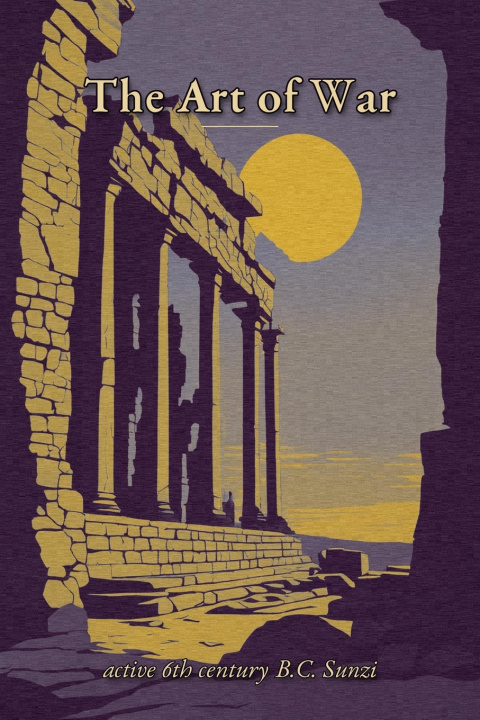
The Art of War
 Angličtina
 80 b
80 b
 Nové
Nové
Až 30 dní na vrácení zboží

The treatise has shaped military thinking worldwide, inspiring leaders from Mao Zedong to Douglas MacArthur with its timeless principles of strategy and discipline.
1. Sun Tzŭ said: The art of war is of vital importance to the State. 2. It is a matter of life and death, a road either to safety or to ruin. Hence it is a subject of inquiry which can on no account be neglected. 3. The art of war, then, is governed by five constant factors, to be taken into account in one's deliberations, when seeking to determine the conditions obtaining in the field. 4. These are: (1) The Moral Law; (2) Heaven; (3) Earth; (4) The Commander; (5) Method and discipline. [It appears from what follows that Sun Tzŭ means by "Moral Law" a principle of harmony, not unlike the Tao of Lao Tzŭ in its moral aspect. One might be tempted to render it by "morale," were it not considered as an attribute of the ruler in § 13.] 5, 6. The Moral Law causes the people to be in complete accord with theirruler, so that they will follow him regardless of their lives, undismayed by any danger. [Tu Yu quotes Wang Tzŭ as saying: "Without constant practice, the officers will be nervous and undecided when mustering for battle; without constant practice, the general will be wavering and irresolute when the crisis is at hand."] 7. Heaven signifies night and day, cold and heat, times and seasons. [The commentators, I think, make an unnecessary mystery of two words here. Meng Shih refers to "the hard and the soft, waxing and waning" of Heaven. Wang Hsi, however, may be right in saying that what is meant is "the general economy of Heaven," including the five elements, the four seasons, wind and clouds, and other phenomena.] 8. Earth comprises distances, great and small; danger and security; open ground and narrow passes; the chances of life and death. 9. The Commanderstands for the virtues of wisdom, sincerity, benevolence, courage and strictness. [The five cardinal virtues of the Chinese are (1) humanity or benevolence; (2) uprightness of mind; (3) self-respect, self-control, or "proper feeling;" (4) wisdom; (5) sincerity or good faith. Here "wisdom" and "sincerity" are put before "humanity or benevolence," and the two military virtues of "courage" and "strictness" substituted for "uprightness of mind" and "self-respect, selfcontrol, or 'proper feeling.'"] 10. By Method and discipline are to be understood the marshalling of the army in its proper subdivisions, the gradations of rank among the officers, the maintenance of roads by which supplies may reach the army, and the control of military expenditure. 11. These five heads should be familiar to every general: he who knows them will be victorious; he who knows them not will fail.


Informace o knize
Angličtina

Darujte tuto knihu ještě dnes
Je to snadné
1 Přidejte knihu do košíku a zvolte doručit jako dárek 2 Obratem vám zašleme poukaz 3 Kniha dorazí na adresu obdarovanéhoAhoj! Jsem Libroamiko, tvůj knižní rádce.
Jak ti můžu pomoct?