Doprava zdarma při nákupu nad 1 499 Kč přes Zásilkovnu nebo PPL Box.

Staňte se součástí komunity milovníků knih z celého světa a získejte hromadu výhod.
Založit účet zdarma
Doprava zdarma se Zásilkovnou nad 1 499 Kč
Kurýr DPD 69 Kč
PPL shop 49 Kč
Balíkovna 69 Kč
PPL kurýr 74 Kč
PPL box 39 Kč
Balíkovna 49 Kč
Výdejní místo DPD 49 Kč
Zásilkovna 39 Kč
 Kontakt
 Jak nakupovat
Pomoc
Doručení
Kurýr DPD 69 Kč
PPL shop 49 Kč
Balíkovna 69 Kč
PPL kurýr 74 Kč
PPL box 39 Kč
Balíkovna 49 Kč
Výdejní místo DPD 49 Kč
Zásilkovna 39 Kč
Doprava zdarma se Zásilkovnou nad 1 499 Kč
Nákupní rádce
Jsme tu pro vás!
571 999 090
Můj účet
▸
Prázdný :-(
0
Doprava zdarma při nákupu nad 1 499 Kč přes Zásilkovnu nebo PPL Box.
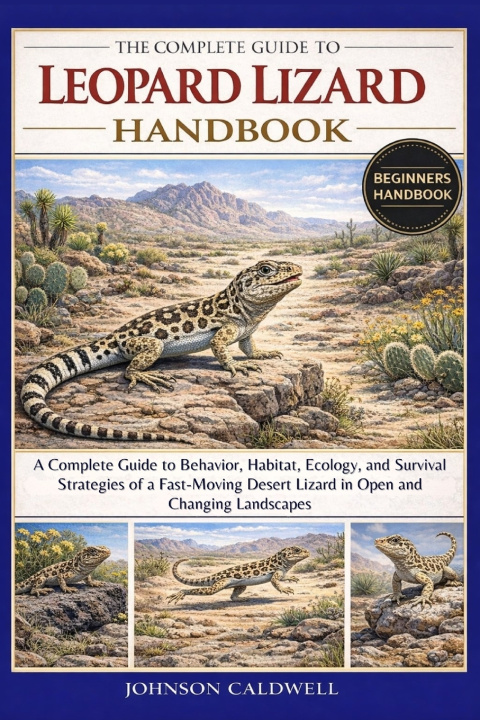
THE COMPLETE GUIDE TO LEOPARD LIZARD HANDBOOK
A Complete Guide to Behavior, Habitat, Ecology, and Survival Strategies of a Fast-Moving Desert Lizard in Open and Changing Landscapes
Jazyk
 Angličtina
Angličtina
Kniha
Brožovaná
Introduction to the Leopard LizardA Desert Lizard Built for Exposure, Speed, and PrecisionThe leopar...
Celý popis
Libristo kód: 50850798
?
 36 b
36 b
36 b
362
Kč
Skladem u dodavatele
Odesíláme za 14-21 dnů
Až 30 dní na vrácení zboží

Introduction to the Leopard Lizard
A Desert Lizard Built for Exposure, Speed, and Precision
The leopard lizard is the kind of reptile that makes sense the moment you see it in its natural setting. It does not hide in dense vegetation or creep quietly through thick ground cover. Instead, it lives in open country-wide, sun-washed spaces where the ground is pale and dry, the shadows are sharp, and the horizon feels close. In that exposed world, survival depends on the ability to read heat, terrain, and movement with accuracy. The leopard lizard meets those demands with a body designed for sprinting, a temperament shaped by caution, and a lifestyle that balances boldness with instant retreat.The name "leopard lizard" comes from its striking spotted pattern, which can look almost too decorative for such a harsh landscape. Yet those markings are not simply ornamental. In many habitats, the mixture of light soil, broken shadows, scattered stones, and patchy vegetation creates a visually complex background. Spots and bars break up the lizard's outline, making it harder for predators to lock onto its shape when it freezes. The leopard lizard is not a creature that relies on one trick; its success comes from switching seamlessly between camouflage, speed, and shelter-depending on what the moment demands.
Where It Fits in the Living Desert
Leopard lizards are most strongly associated with arid and semi-arid regions, where plant cover is low and the ground heats quickly. These landscapes can look empty to people, but they are full of movement at small scales: insects shifting in the dust, small mammals cutting across open ground, birds watching from above, and other reptiles using rocks and burrows as thermal refuges. Within that active network, the leopard lizard sits in an important middle position. It is a predator of smaller animals, yet it is also prey for larger hunters. That dual role shapes everything about its behavior.
In practical terms, a leopard lizard must behave like an efficient hunter without becoming a visible target. It must feed enough to maintain body condition, grow, and reproduce, but it must also avoid drawing attention while doing so. This is why its daily routine is rarely chaotic. Instead, it is structured, repetitive, and highly responsive to micro-changes in temperature and risk.
A Life Directed by Heat and Ground-Level Reality
If there is one key to understanding the leopard lizard, it is this: body temperature controls life quality. When the lizard is too cool, it cannot move well, cannot strike accurately, and cannot escape quickly. When it is too hot, it risks dehydration, overheating, and reduced coordination. The leopard lizard solves this by treating the environment like a map of thermal options. Sunlit soil, shaded shrubs, burrow entrances, and rock edges each represent different temperatures. The lizard moves through that thermal map throughout the day, using posture and location to keep its body within a workable range.
This is why leopard lizards are so often seen in transitional zones-near burrow openings, along the edges of low shrubs, or on slightly elevated ground where they can bask but still retreat. Their presence is rarely random. If you see a leopard lizard sitting still, it is not wasting time. It is making a choice that balances warmth, visibility, and escape distance.
Herečka
&
Polyglotka
EWA KASP
pro
Přehrát video


Libristo má největší výběr cizojazyčné literatury. Proto své knihy kupuji tady.
Informace o knize
Plný název
THE COMPLETE GUIDE TO LEOPARD LIZARD HANDBOOK
Autor
JOHNSON CALDWELL
Jazyk
Angličtina
Angličtina
Vazba
Kniha - Brožovaná
Datum vydání
2026
Počet stran
126
EAN
9798245023540
Libristo kód
50850798
Nakladatelství
Independently published
Váha
181
Rozměry
152 x 229 x 7
Kategorie
Matematika a věda
>
Biologie, vědy o živé přírodě
>
Zoologie a vědy zabývající se živočichy
>
Zoologie: ryby (ichtyologie)

Darujte tuto knihu ještě dnes
Je to snadné
1 Přidejte knihu do košíku a zvolte doručit jako dárek 2 Obratem vám zašleme poukaz 3 Kniha dorazí na adresu obdarovaného
Knižní rádce Libroamiko
Užíváním tohoto chatu komunikujete s generativní umělou inteligencí. Jeho užíváním také souhlasíte se zpracováním osobních údajů.
Ahoj! Jsem Libroamiko, tvůj knižní rádce.
Jak ti můžu pomoct?
Ahoj, jsem Libroamiko, můžu pomoct?