
 Kontakt
 Jak nakupovat
Doručení
Nákupní rádce
 Angličtina
 44 b
44 b
 Nové
Nové
30 dní na vrácení zboží

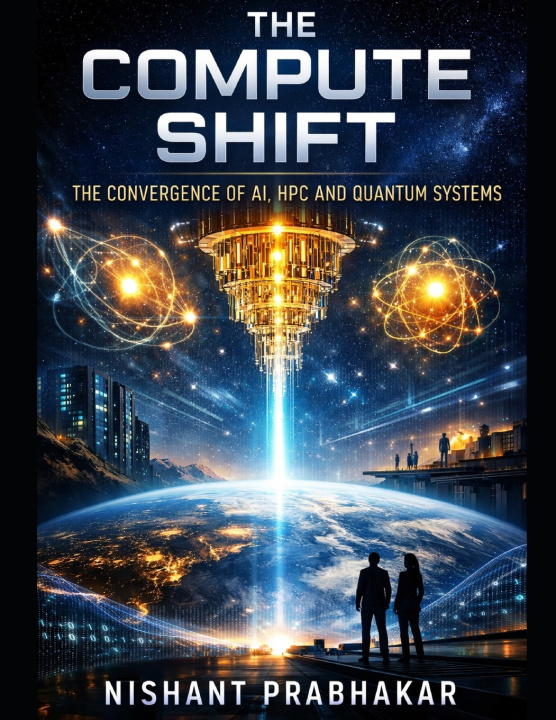
This book begins with a simple observation.
The future of computing is being described as a race to build better machines. Faster processors. Larger models. More powerful quantum systems. The conversation focuses on breakthroughs, on who will reach them first, and on what those machines might eventually do.
But something more fundamental is taking shape beneath that narrative.
Computing is no longer just about machines. It is becoming infrastructure.
For decades, computing lived inside organizations. Companies owned servers. Universities built clusters. Governments funded specialized systems for research. These machines were important, but they were contained. They served specific purposes within defined boundaries.
That model is changing.
The scale of computation required today is far larger. Scientific research depends on massive simulations. Financial systems run continuous risk models. Artificial intelligence requires vast amounts of processing power. Emerging technologies, including quantum computing, demand environments that combine multiple forms of computation.
No single machine can meet these needs.
Instead, a new architecture is beginning to form. High performance computing systems, AI accelerators, and quantum processors are being brought together into unified platforms. Each plays a different role. Together they create a system that is more capable than any one technology alone.
This is the hybrid compute era.
Once computing reaches this level of scale, it starts to resemble other forms of infrastructure. Electricity grids enabled industrial growth. Railways connected markets. Telecommunications created global networks of information.
Compute is beginning to play a similar role.
The locations where this infrastructure is built will matter. They will influence where research happens, where companies operate, and where new technologies emerge. Over time, they may shape entire ecosystems of talent, capital, and innovation.
This creates an important shift in how technological advantage is understood.
The question is no longer only about who builds the most advanced processor. It is also about who builds the platforms where those processors are used. The systems where scientists run experiments, where companies solve complex problems, and where developers create new tools.
In that sense, computing is becoming a shared resource.
And like all infrastructure, it will have geography.
This book explores that transition. It examines how hybrid computing systems are structured, how they can be built, and how they may evolve into platforms that support industries across the world.
It also considers a specific possibility.
That a country does not need to invent every component of the future of computing in order to shape it. By building the right infrastructure, it can become the place where that future is realized.
The shift will not be sudden. It will emerge gradually, as systems are built, as ecosystems form, and as more of the world begins to depend on them.
When it does, computing will no longer be something that organizations simply use.
It will be something that economies are built on.


Informace o knize
Angličtina
Kategorie
