
 Kontakt
 Jak nakupovat
Doručení
Nákupní rádce
 Angličtina
 64 b
64 b
30 dní na vrácení zboží

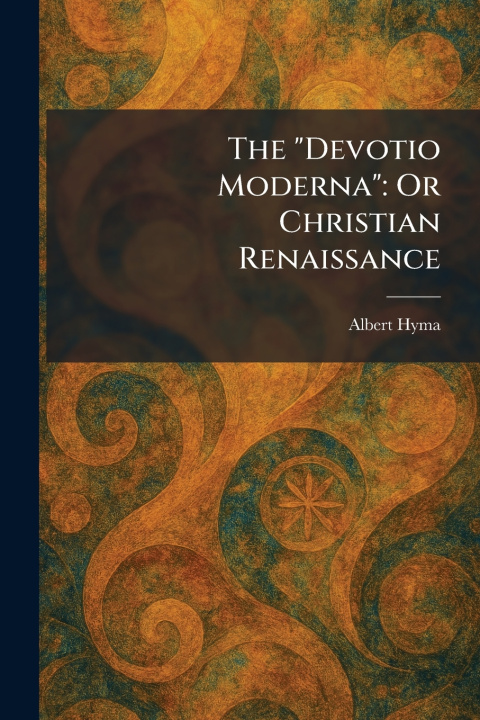
"The 'Devotio Moderna': Or Christian Renaissance" provides a comprehensive examination of the influential religious movement that emerged in the Low Countries during the late fourteenth century. This scholarly work explores the spiritual revival led by figures such as Gerard Groote and the subsequent impact of the Brethren of the Common Life. By analyzing the shift toward personal piety and internal devotion, the text illustrates how this movement bridged the gap between medieval mysticism and the later developments of the Reformation.
The book details the life and teachings of key proponents, including Thomas à Kempis, and examines the movement's focus on education, the copying of manuscripts, and the pursuit of a Christ-centered life. Albert Hyma presents the 'Devotio Moderna' not merely as a localized phenomenon, but as a significant "Christian Renaissance" that transformed the intellectual and religious landscape of Europe. Through a meticulous study of historical documents and theological shifts, this work highlights the movement's enduring legacy in shaping Western spiritual thought. It remains an essential resource for readers interested in the history of Christianity, medieval studies, and the evolution of religious education.
This work has been selected by scholars as being culturally important, and is part of the knowledge base of civilization as we know it. This work was reproduced from the original artifact, and remains as true to the original work as possible. Therefore, you may see the original copyright references, library stamps (as most of these works have been housed in our most important libraries around the world), and other notations in the work.
This work is in the public domain in the United States of America, and possibly other nations. Within the United States, you may freely copy and distribute this work, as no entity (individual or corporate) has a copyright on the body of the work.
As a reproduction of a historical artifact, this work may contain missing or blurred pages, poor pictures, errant marks, etc. Scholars believe, and we concur, that this work is important enough to be preserved, reproduced, and made generally available to the public. We appreciate your support of the preservation process, and thank you for being an important part of keeping this knowledge alive and relevant.


Informace o knize
Angličtina
