
 Kontakt
 Jak nakupovat
Doručení
Nákupní rádce
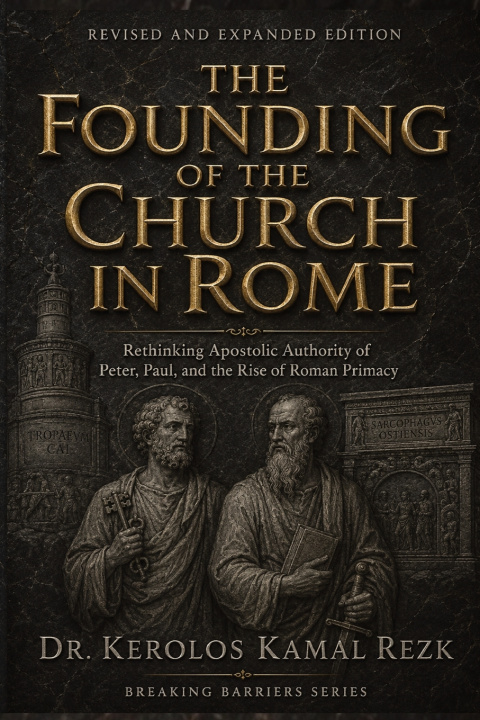
The founding of the Church in Rome
Rethinking Apostolic Authority, Peter, Paul, and the rise of Roman Primacy
 Angličtina
 36 b
36 b
Až 30 dní na vrácení zboží

This edition provides a unique paradigm shift in contemporary English scholarship on Christian origins by integrating the insights of the Eastern Coptic Orthodox heritage directly into the heart of the Roman debate. By weaving together early patristic testimonies, late-breaking forensic data from the Pauline excavations, and the foundational ecclesiology of the See of Alexandria, this study reveals that the ancient Coptic Church-while deeply venerating Peter's memory and martyrdom in Rome-holds a profoundly nuanced perspective on apostolic authority.
Alexandria's historical and liturgical memory, solidified following the Council of Chalcedon (451 AD), honors Saint Peter's foundational role primarily in Antioch. Within the Roman context, this Coptic lens recognizes Saint Peter's and Saint Paul's dual martyrdom as a powerful spiritual witness of collegiality, but rigorously rejects subsequent claims that this shared authority created a perpetual, hierarchical jurisdictional primacy. This volume is an indispensable resource, empowering historians, theologians, and scholars to move beyond polarized Western confessional polemics and embrace the richer, empirical truth behind the early See of Rome.
A Multi-Disciplinary Reassessment of Christian Origins
To construct a rigorous, objective baseline, this work systematically isolates five historical-critical pillars, evaluating the traditional claims of both Western and Eastern ecclesiologies against:
- The Biblical Witness: A meticulous exegesis of the Pauline Epistles and the Book of Acts, analyzing the scriptural silence regarding Peter's Roman residency alongside the highly documented prison ministry of Paul.
- Patristic Consensus: A chronological evaluation of early Christian testimonies-including Clement of Rome, Ignatius, Irenaeus, Tertullian, Eusebius, and Jerome-challenging long-held ecclesiastical chronologies such as the traditional twenty-five-year Petrine episcopate.
- The Archaeological Record: A detailed review of the Vatican excavations, the "Petros Eni" graffiti wall, and the 2006-2009 scientific investigations of Saint Paul's sarcophagus, separating early Christian martyrdom veneration from institutional governance.
- Chronological Modeling: Reconstructing the timelines of both apostles to present a historically probable narrative of their final years and simultaneous martyrdoms under Nero.
Reclaiming the Eastern Collegial Paradigm
Moving beyond the classical Roman Catholic and Protestant binary, this study introduces the concept of the "Markan Triangle" (Jerusalem, Rome, and Alexandria) to illustrate how the early Church operated under a non-hierarchical, collegial network of sister sees. In doing so, it uncovers crucial, overlooked historical developments, such as the fact that the title "Pope" (pappas) was officially used as an ecclesiastical title for the Patriarch of Alexandria (under Pope Heraclas, 232-248 AD) nearly three centuries before it was assumed by the Bishop of Rome.
By anchoring its final theological assessment in both historical realities and modern ecumenical progress-most notably the 2015 official agreed statements on synodality and communion-this volume provides a scholarly path toward reconciliation that honors the unique, complementary, and synergistic legacies of both Peter and Paul.


Informace o knize
Angličtina

Darujte tuto knihu ještě dnes
Je to snadné
1 Přidejte knihu do košíku a zvolte doručit jako dárek 2 Obratem vám zašleme poukaz 3 Kniha dorazí na adresu obdarovanéhoAhoj! Jsem Libroamiko, tvůj knižní rádce.
Jak ti můžu pomoct?