
 Kontakt
 Jak nakupovat
Doručení
Nákupní rádce
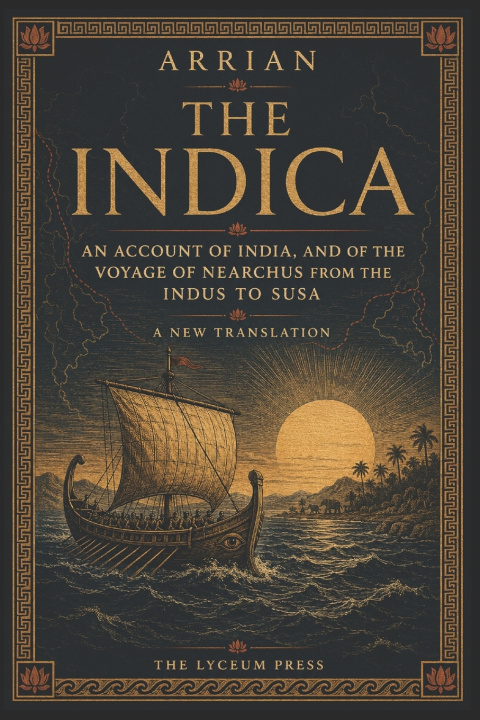
The Indica
An Account of India, and of the Voyage of Nearchus from the Indus to Susa
 Angličtina
 28 b
28 b
 Připravujeme
 Nové
Nové
Až 30 dní na vrácení zboží

At the edge of Alexander's conquered world, a fleet sailed into the unknown.
In 325 BC, Alexander the Great ordered his admiral Nearchus to lead a fleet from the mouth of the Indus westward to Persia. The ships entered seas scarcely known to the Greeks, following an unfamiliar and often hostile coast through violent weather, hunger, dangerous shoals, and lands where even fresh water could not be taken for granted. The voyage became one of antiquity's most remarkable accounts of exploration and survival.
Arrian's The Indica preserves that story. Written as a companion to his celebrated Anabasis of Alexander, it begins with the India encountered-and imagined-by the Greeks of Alexander's age. Drawing principally upon Nearchus and the ambassador Megasthenes, Arrian describes the great rivers of the subcontinent, its cities and peoples, its customs and social orders, and its elephants, tigers, pearls, cotton garments, strange fishes, and legendary gold-digging ants.
The narrative then turns to Nearchus's expedition. From the Indus, the fleet passes through the country of the Fish-eaters, where houses are framed from whale bones and bread is made from dried fish; confronts squalls, surf, hunger, and seemingly endless desert shores; and finally reaches Carmania. There Nearchus-sunburned, emaciated, and almost unrecognizable-is reunited with Alexander in one of the most affecting scenes in the literature of the campaigns.
Arrian composed The Indica in the Ionic dialect of Herodotus, deliberately invoking the earliest Greek traditions of history, geography, and travelers' tales. His work stands at the meeting point of eyewitness testimony and inherited wonder: skeptical without being dismissive, precise where evidence permits, and candid about the limits of what Greeks believed they knew.
This complete new translation has been made from the Greek text edited by R. Hercher and A. Eberhard. It preserves all forty-three chapters in a deliberately clear but historically resonant English, retaining Arrian's distinctions between what Nearchus saw, what Megasthenes reported, and what the historian himself believed.
This Lyceum Press edition also includes:
• An original foreword introducing Arrian, his sources, and the historical setting
• A list of the principal persons appearing in the work
• A guide to ancient distances, measures, watches, and chronological reckonings
• A textual note recording significant variant readings and editorial decisions
For readers of Alexander the Great, ancient India, classical history, maritime exploration, and Greek literature, The Indica offers a vivid record of the moment when the known world opened onto a coast of marvels.


Informace o knize
Angličtina

Darujte tuto knihu ještě dnes
Je to snadné
1 Přidejte knihu do košíku a zvolte doručit jako dárek 2 Obratem vám zašleme poukaz 3 Kniha dorazí na adresu obdarovanéhoAhoj! Jsem Libroamiko, tvůj knižní rádce.
Jak ti můžu pomoct?