
 Kontakt
 Jak nakupovat
Doručení
Nákupní rádce
Kernel Method of Test Equating
 Angličtina
 406 b
406 b
Až 30 dní na vrácení zboží
Zákazníci také koupili




 /
/
 Brožovaná
 1 990
Kč
1 990
Kč

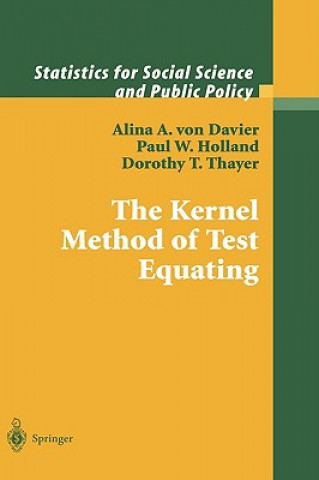
Kernel Equating (KE) is a powerful, modern and unified approach to test equating. It is based on a flexible family of equipercentile-like equating functions and contains the linear equating function as a special case. Any equipercentile equating method has five steps or parts. §They are: 1) pre-smoothing; 2) estimation of the score-probabilities on the target population; 3) continuization; 4) computing and diagnosing the equating function; 5) computing the standard error of equating and related accuracy measures. KE brings these steps together in an organized whole rather than treating them as disparate problems.KE exploits pre-smoothing by fitting log-linear models to score data, and incorporates it into step 5) above. KE provides new tools for diagnosing a given equating function, and for comparing two or more equating functions in order to choose between them. In this book, KE is applied to the four major equating designs and to both Chain Equating and Post-Stratification Equating for the Non-Equivalent groups with Anchor Test Design.§This book will be an important reference for several groups: (a) Statisticians and others interested in the theory behind equating methods and the use of model-based statistical methods for data smoothing in applied work; (b) Practitioners who need to equate tests including those with these responsibilities in testing companies, state testing agencies and school districts; and (c) Instructors in psychometric and measurement programs. The authors assume some familiarity with linear and equipercentile test equating, and with matrix algebra.


Informace o knize
Angličtina
Kategorie

Darujte tuto knihu ještě dnes
Je to snadné
1 Přidejte knihu do košíku a zvolte doručit jako dárek 2 Obratem vám zašleme poukaz 3 Kniha dorazí na adresu obdarovanéhoMohlo by vás také zajímat


Ahoj! Jsem Libroamiko, tvůj knižní rádce.
Jak ti můžu pomoct?