
 Kontakt
 Jak nakupovat
Doručení
Nákupní rádce
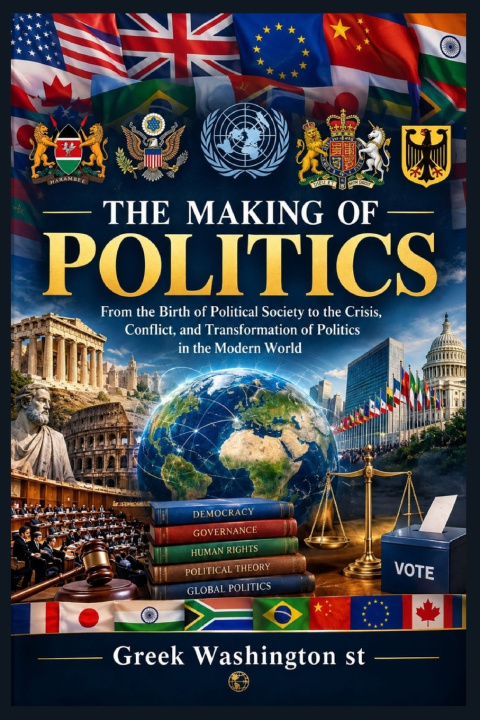
THE MAKING OF POLITICS
From the Birth of Political Society to the Crisis, Conflict, and Transformation of Politics in the Modern World
 Angličtina
 86 b
86 b
 Nové
Nové
Až 30 dní na vrácení zboží

THE POLITICS OF POWERWhy do human societies create governments? Who gets power and why? What was politics originally meant to accomplish, and how did it become the complicated world we know today?
Politics is everywhere. It shapes governments, laws, economies, wars, elections, rights, institutions, communities, and the everyday lives of billions of people. Yet many people participate in political systems without fully understanding where those systems came from, why they developed, or how political power has changed across history.
The Politics of Power takes readers on a journey through the evolution of political life from ancient societies and the earliest forms of government to democracy, political parties, revolutions, nationalism, ideology, modern elections, political communication, social media, and the emerging influence of artificial intelligence.
Rather than presenting politics as a simple battle between opposing sides, this book examines the ideas, institutions, historical events, and human interests that have shaped political systems across generations.
Inside, readers will explore:
• How and why organized political societies emerged
• The origins of government, authority, law, and citizenship
• Ancient political thought and the development of democracy
• The ideas of influential political philosophers and thinkers
• The transformation from monarchies and empires to modern states
• The rise of constitutions, political parties, elections, and mass participation
• Liberalism, conservatism, socialism, communism, nationalism, fascism, and other political traditions
• Colonialism, independence movements, revolutions, and the changing global order
• How money, institutions, political interests, and influence shape modern politics
• Propaganda, political communication, media, and public opinion
• Political polarization, populism, political violence, and authoritarianism
• The relationship between citizens, governments, rights, and political institutions
• How the internet and social media have transformed political communication
• Disinformation, political trust, algorithms, and the modern information environment
• The growing questions surrounding artificial intelligence and politics
• How political systems differ across Africa, Europe, Asia, the Americas, and the Middle East
• What history can teach present and future generations about political power
At its heart, this book asks a fundamental question:
What happened to politics between the political world human beings originally imagined and the political world we inhabit today?
The answer is not simple. Political history is a story of extraordinary progress, persistent conflict, expanding participation, concentrated power, political ideals, institutional failures, social transformation, and continuing struggles over freedom, equality, authority, representation, and justice.
Written as both an introduction and a deeper study of political life, The Politics of Power is designed to help readers understand politics rather than simply react to it.
Whether you are a student encountering political science for the first time, an educator looking for a broad historical perspective, a reader interested in government and democracy, or simply someone who wants to understand how political power shapes the modern world, this book provides a foundation for asking better questions and thinking more critically about the political systems that influence our lives.
Understanding its history may be one of the most important ways to understand our present and prepare for the political world of the future.


Informace o knize
Angličtina

Darujte tuto knihu ještě dnes
Je to snadné
1 Přidejte knihu do košíku a zvolte doručit jako dárek 2 Obratem vám zašleme poukaz 3 Kniha dorazí na adresu obdarovanéhoAhoj! Jsem Libroamiko, tvůj knižní rádce.
Jak ti můžu pomoct?