
 Kontakt
 Jak nakupovat

Doručení
Nákupní rádce
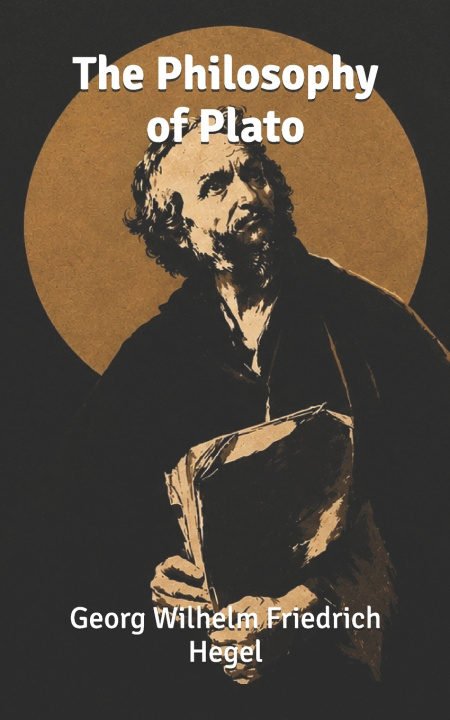
The Philosophy of Plato
 Angličtina
 28 b
 Nové
Až 30 dní na vrácení zboží

The text The Philosophy of Plato is drawn from Georg Wilhelm Friedrich Hegel's Vorlesungen über die Geschichte der Philosophie (Lectures on the History of Philosophy). It is not an independent essay but part of a university lecture course delivered between 1805 and 1831 and published posthumously from students' lecture notes and Hegel's manuscripts, chiefly edited by Karl Ludwig Michelet. The present selection is found in Part One: Greek Philosophy, Section One: From Thales to Aristotle, Chapter Three: Plato and Aristotle, subsection A. The Philosophy of Plato, which contains the general introduction on Plato's life and formation, and includes 1. Dialectic, 2. Philosophy of Nature e 3. Philosophy of Spirit.
Hegel presents Plato as one of the great world-historical individuals of philosophy and as the thinker who carried the Socratic principle, the determination of essence in thought and consciousness, into a broader and more systematic dimension. Hegel surveys the circumstances of Plato's life, his education, his relation to Socrates, his travels, and his activity in the Academy, while also discussing the dialogical form of his writings. He likewise emphasizes the difficulties involved in interpreting the dialogues, especially the mixture of representation, myth, and conceptual thought, without reducing Platonic philosophy to elements that belong merely to its mode of representation.
Hegel then presents the content of Platonic philosophy according to three major directions: speculative philosophy, or Dialectic; the Philosophy of Nature; and the Philosophy of Spirit. In the Dialectic, Plato raises the investigation above sensible representations and opinions, leading it into the realm of pure thoughts and Ideas and investigating determinations such as being and non-being, the One and the Many, identity and difference. Hegel distinguishes this movement both from sophistic dialectic and from mere negative argumentation, emphasizing its effort to grasp the concrete unity of opposed determinations. In the Philosophy of Nature, especially in the Timaeus, Plato conceives the world as a living and rational whole, drawing upon numerical, geometrical, and Pythagorean determinations to apprehend its structure. Hegel recognizes in these speculations a profound attempt to comprehend nature as the realization of the Idea, although he considers their empirical explanations insufficient and their mode of exposition still representational and mythical.
In the Philosophy of Spirit, especially in the Republic, Hegel finds the concrete expression of Greek ethical life and of the conception of the State as the actuality of Spirit. Plato organizes the State according to different estates and functions corresponding to wisdom, courage, and moderation, while justice constitutes the organic unity of these determinations in the whole and in the individual. Education and the philosophical formation of the rulers are fundamental to preserving this ethical organism, while the Platonic constitution subordinates singularity to the Universal. For Hegel, however, its limitation lies precisely in its failure to fully recognize the principle of subjective freedom, which would later become a necessary moment of the Idea. Nevertheless, his philosophy profoundly apprehends the substantial content of his time, making Greek ethical life the concrete content of his Philosophy of Spirit.
Translated directly from the German by Lucas Praxedes. Translator's notes are indicated in the text by "(Tr.)".


Informace o knize
Angličtina

Darujte tuto knihu ještě dnes
Je to snadné
1 Přidejte knihu do košíku a zvolte doručit jako dárek 2 Obratem vám zašleme poukaz 3 Kniha dorazí na adresu obdarovanéhoAhoj! Jsem Libroamiko, tvůj knižní rádce.
Jak ti můžu pomoct?