
 Kontakt
 Jak nakupovat
Doručení
Nákupní rádce
 Angličtina
 38 b
38 b
 Nové
Nové
Až 30 dní na vrácení zboží

There is a kind of vow you only make after someone tells you, in public, that you don't belong.
You walked out of something once. A classroom, a job, a conversation, a life that had no room for who you actually were. And you made a vow - one that embarrassed you a little, because you weren't sure you could keep it.
Sibawayh walked out of a grammar lesson in 775 CE with a worse version of that vow. A professor had just publicly corrected his Arabic - asked, in front of thirty students, whether he had any shame. He was Persian, a foreigner, a learner. He went to the canal behind the mosque and stood there for a long time.
Then he made a vow that would eventually become the most important book in the history of the Arabic language.
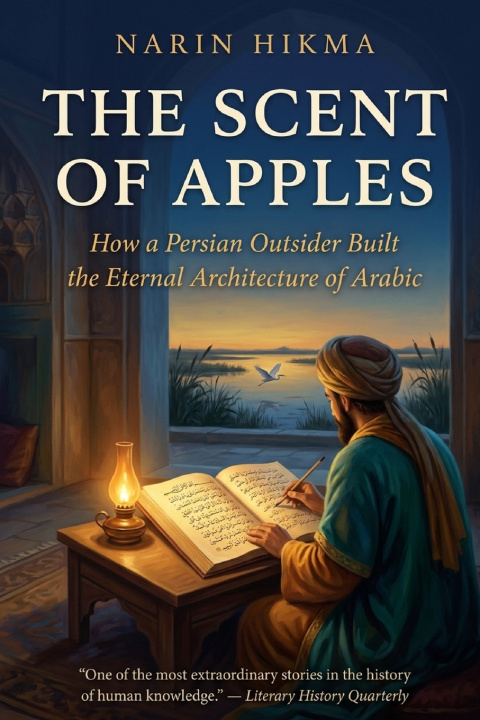
The Scent of Apples is the story of what happened next. It is a narrative history of Sibawayh - the eighth-century Persian scholar whose outsider's eye saw what no native speaker could see, and who spent the rest of his short life writing it down. His grammar, Al-Kitab, describes the Arabic language with a precision that scholars are still working through fourteen centuries later. He was summoned to Baghdad to defend it, was defeated by bribery and false testimony, and died in his thirties - before he could know that his analysis had survived, that his opponents had confessed, that he would be remembered forever as the imam of all grammarians.
- Find yourself in the story of a man who turned the worst moment of his life into something permanent
- Understand why the thing you had to work for is worth more than the thing you were simply given
- See your own outsider's distance as the gift it actually was all along
- Stay inside a story that refuses to let you go until the last page - and stays with you after
For anyone who has ever been told they don't belong in the room they're standing in.
This is the story of the man who answered that verdict by writing a book that outlasted the room.
Open the first page. The rest will follow.


Informace o knize
Angličtina
