
 Kontakt
 Jak nakupovat
Doručení
Nákupní rádce
The Seventh Shot
 Angličtina
 25 b
25 b
 Nové
Nové
Až 30 dní na vrácení zboží

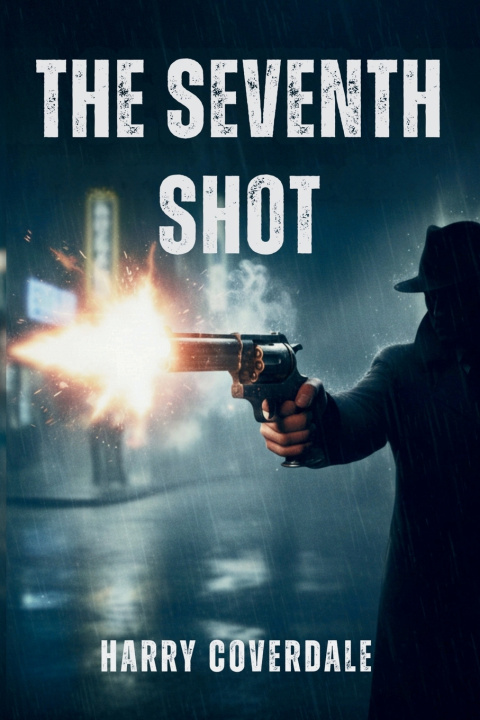
The Seventh Shot by Harry Coverdale belongs to a tradition of early twentieth-century crime fiction in which tension is built not only through action, but through the careful unfolding of events and the steady revelation of hidden truths. The title itself immediately suggests a moment of consequence, an act that stands apart from those that came before it, and a turning point that demands explanation.
Stories centered on crime often begin with a single incident, yet in this case the emphasis implied by "the seventh" points to a sequence, a pattern in which each action contributes to a larger and more complex narrative. This structure invites the reader to consider not just what has happened, but how and why events have progressed to that decisive moment. It is this sense of progression that shapes the novel's suspense, encouraging attention to detail and a willingness to question initial assumptions.
Early mystery and suspense fiction frequently relied on the interplay between visible evidence and hidden motives, and The Seventh Shot reflects that approach. Characters operate within a framework where information is incomplete and where understanding must be constructed piece by piece. Each development adds depth, but also introduces new uncertainty. What appears straightforward may conceal deeper complications, and what seems insignificant may prove crucial.
The pacing of the narrative supports this gradual buildup. Rather than relying on constant action, the story allows tension to develop through anticipation and interpretation. Readers are drawn into a process of discovery, following the unfolding sequence of events and attempting to make sense of their implications. This method creates a sustained engagement, as each new element reshapes the reader's perspective.
The thematic focus on consequence is central to the novel's impact. Actions do not exist in isolation. They carry weight, influencing both the direction of the story and the relationships between characters. Decisions, whether deliberate or impulsive, contribute to a chain of events that ultimately leads to resolution. This emphasis on cause and effect reinforces the narrative's sense of coherence, while also highlighting the complexity of human behavior.
Stylistically, the work reflects the conventions of its time. The prose is direct and functional, designed to convey information clearly while maintaining a consistent tone. Dialogue serves as a key tool for revealing character and advancing the plot, while description is used selectively to establish atmosphere. This balance allows the story to move forward without unnecessary distraction, keeping the focus on the unfolding mystery.
For modern readers, The Seventh Shot offers both entertainment and a connection to the history of crime fiction. It represents a period when writers were refining the techniques that would later define the genre, experimenting with structure, pacing, and the presentation of clues. The result is a narrative that may feel familiar in its core elements, yet distinct in its execution.
At the same time, the novel provides insight into the cultural context of its era. The values, assumptions, and perspectives reflected in the story are part of its historical character, offering an additional layer of interest for those who appreciate early twentieth-century literature.
This edition has been carefully prepared to preserve the integrity of the original text while improving readability for contemporary audiences. Minor typographical errors have been corrected, but the language and structure remain faithful to the source material. The aim is to present the work in a form that respects its origins while ensuring accessibility.


Informace o knize
Angličtina

Darujte tuto knihu ještě dnes
Je to snadné
1 Přidejte knihu do košíku a zvolte doručit jako dárek 2 Obratem vám zašleme poukaz 3 Kniha dorazí na adresu obdarovanéhoAhoj! Jsem Libroamiko, tvůj knižní rádce.
Jak ti můžu pomoct?