
 Kontakt
 Jak nakupovat
Doručení
Nákupní rádce
 Angličtina
 42 b
42 b
 Nové
Nové
Až 30 dní na vrácení zboží

What if the biggest forces shaping your life are the ones you were never taught to see?
Before you ever made a choice about money, education, work, faith, family, status, or success, you had already entered a world of rules, expectations, incentives, institutions, and inherited beliefs.
Some of those systems protect you. Some restrict you. Others shape your behavior so quietly that they begin to feel like personality, tradition, common sense-or simply "the way life works."
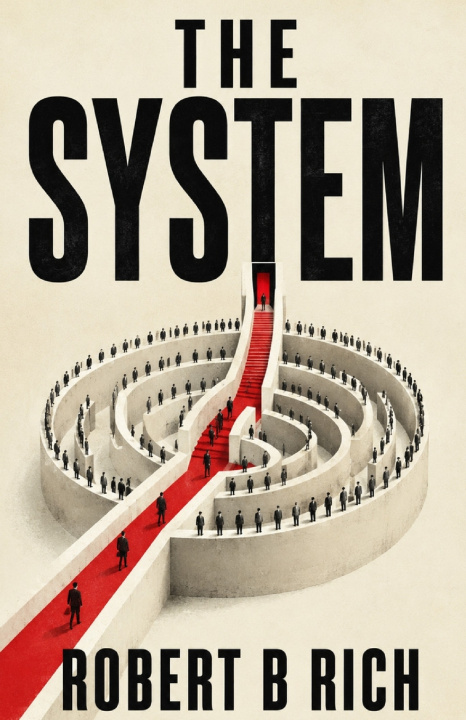
In The System: The Hidden Architecture of Power, Belief, Opportunity, and Human Freedom, Robert B. Rich examines the structures beneath everyday life and asks a difficult but necessary question:
How much of what we call personal choice is shaped by systems we barely understand?
Moving across family, education, employment, money, religion, culture, technology, class, migration, institutions, and political power, this book reveals how systems influence who gets access, who carries risk, who receives protection, whose voice matters, and which futures people are encouraged-or discouraged-to imagine.
But this is not a conspiracy book, and it is not an argument for helplessness.
Rich rejects both extremes: the belief that every outcome is simply the result of individual effort, and the belief that individuals have no meaningful power at all. Instead, he shows how structure and responsibility, power and choice, inheritance and agency constantly interact.
You will discover why institutions often reward behavior that contradicts their stated values, how unwritten rules can matter more than official policies, why scarcity changes decision-making, how attention has become an economic resource, why success does not always produce freedom, and how people who escape one damaging system can unknowingly recreate it somewhere else.
More importantly, The System moves beyond criticism.
It explores how to build margin, develop leverage, recognize hidden dependencies, challenge destructive arrangements, create better alternatives, and design families, businesses, communities, and institutions capable of learning, accountability, and correction.
Written for readers who want to understand the world without reducing it to slogans, villains, or easy answers, this is a book about seeing clearly-and then deciding what to do with what you see.
Because real freedom is not simply leaving one system behind.
It is understanding the forces that shaped you, recovering the ability to choose deliberately, and becoming conscious of the systems you will help create for others.


Informace o knize
Angličtina
