
 Kontakt
 Jak nakupovat
Doručení
Nákupní rádce
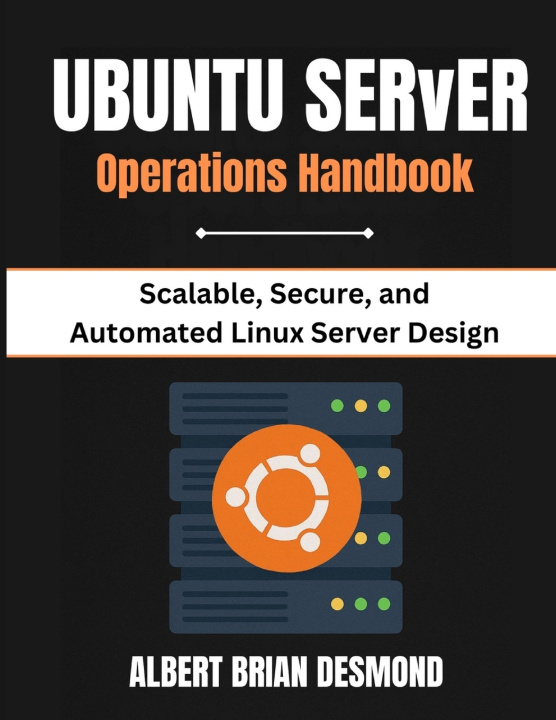
UBUNTU SERVER OPERATIONS HANDBOOK
Scalable, Secure, and Automated Linux Server Design
 Angličtina
 82 b
82 b
Až 30 dní na vrácení zboží
Zákazníci také koupili















What does it really take to run Ubuntu Server in production-day after day, under real pressure, with real users depending on it?
Is it memorizing commands and configuration files-or understanding why systems behave the way they do when traffic spikes, disks fail, certificates expire, or deployments break at 2 a.m.?
Ubuntu Server Operations Handbook is written for those questions-and for professionals who refuse shallow answers.
Why do two Ubuntu servers configured "the same way" behave completely differently in production?
Why does a system that works perfectly in staging collapse under real-world load?
Why does security hardening sometimes break applications-and why does automation save you one day and surprise you the next?
This book doesn't just explain what to do. It constantly explores why, when, and what happens next.
If you are responsible for systems that must stay online, expected to design infrastructure that survives failure instead of reacting to it, or tired of stitching together blog posts, outdated documentation, and tribal knowledge-this handbook is for you.
From the first boot of an Ubuntu Server to operating large-scale, automated, and observable platforms, the book walks through the decisions that actually matter in production. You'll learn why one filesystem is chosen over another, when automation should be trusted-and when it should be slowed down, how to design networking that's debuggable rather than merely functional, and what "secure by default" really means on modern Linux systems.
This is a production-first handbook.
Not a quick-start guide.
Not a collection of disconnected tips.
It treats Ubuntu Server as a platform-not just an operating system.
Inside, you'll explore:
How Ubuntu's release model impacts long-term operational stability
Why systemd is powerful, misunderstood, and often misused-and how to use it safely
How identity, authentication, and secrets actually fail in real environments
What scalable storage, networking, and observability look like beyond theory
How automation, containers, and Kubernetes fit together instead of competing
How to design systems that expect failure and recover cleanly
Throughout the book, the tone remains practical, inquisitive, and grounded in real-world operations. Each chapter challenges assumptions and encourages you to think like an operator, an engineer, and a system designer-not just someone following instructions.
Are you building systems for today-or systems that will still work a year from now?
Are your servers merely configured, or truly engineered?
If someone inherited your infrastructure tomorrow, would it make sense to them?
This handbook is written for system administrators, SREs, DevOps engineers, and platform teams who want clear answers-and better questions. It's for professionals who care about the consequences of their choices, not just the syntax.
By the end, you won't just know how to run Ubuntu Server.
You'll know how to think about it.
If this book helps you operate with more confidence, design with more intention, or sleep better during on-call rotations, consider leaving a review-your feedback helps others find the same clarity.
Ready to stop reacting and start engineering?
Start reading Ubuntu Server Operations Handbook and build systems that earn trust at scale.


Informace o knize
Angličtina