
 Kontakt
 Jak nakupovat
Doručení
Nákupní rádce
 Angličtina
 567 b
567 b
Až 30 dní na vrácení zboží
Zákazníci také koupili




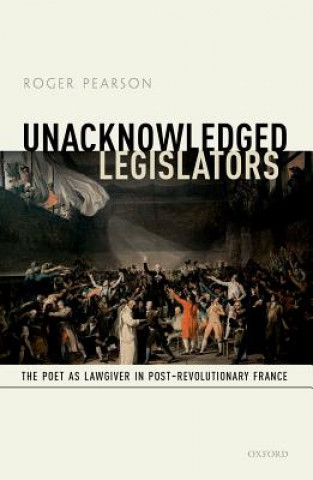
What is the public value of poetry? How do poets envisage their own role and function within society? How do we? Do poets seek to shape public opinion and behaviour? Should they? Or do they offer alternatives-perhaps sacred alternatives-to political and religious ideologies? Are they what Shelley in 1821 called 'the unacknowledged legislators of the World'? And what might that mean? During the decades immediately preceding the Revolution of 1789 the status of contemporary poetry in France was at its lowest ebb. At the same time the perceived power of the writer to influence public events reached a high-water mark with Voltaire's triumphant return to Paris in 1778. In the course of the next century French poetry enjoyed an extraordinary renaissance and flowering, perhaps its greatest. But what of the poet's public influence? In 1881 the people of Paris processed for six hours past the home of Victor Hugo on the occasion of his 79th birthday, and in 1885 an estimated two million people witnessed his state funeral. But who or what were they acknowledging? Poetry or republicanism? Or perhaps their own power? For with each Revolution that passed-1789, 1830, 1848-French poets themselves felt increasingly marginalised. This study addresses the first part of this story and focuses on the role and function of the poet during the so-called Romantic Period. Beginning with an account of the literary climate in pre-revolutionary France it then maps the changes in that climate wrought by the events of the 1789 Revolution. It describes the new politico-literary agendas set by Chateaubriand and others on the monarchist Right, and by Stael and others on the liberal Left. Against this background it then analyses in detail the poetic output and public exploits of the three major French poets of the period: Lamartine, Hugo, and Vigny. The Romantic figure of the poet as prophet and magus is habitually dismissed as a cliche. But by focusing on the role of the poet as lawgiver this book reveals the rich and complex terms in which the public function of poetry was debated in post-revolutionary France - and how amidst the centenary celebrations of 1889, as Romanticism gave way to Symbolism, the poet as lawgiver continued to play a central part in that debate.


Informace o knize
Angličtina
Kategorie

Darujte tuto knihu ještě dnes
Je to snadné
1 Přidejte knihu do košíku a zvolte doručit jako dárek 2 Obratem vám zašleme poukaz 3 Kniha dorazí na adresu obdarovanéhoMohlo by vás také zajímat
 /
/
 Brožovaná
 915
Kč
915
Kč




 /
Brožovaná
506
Kč
/
Brožovaná
506
Kč

 /
Brožovaná
191
Kč
/
Brožovaná
191
Kč
Ahoj! Jsem Libroamiko, tvůj knižní rádce.
Jak ti můžu pomoct?