
 Kontakt
 Jak nakupovat
Doručení
Nákupní rádce
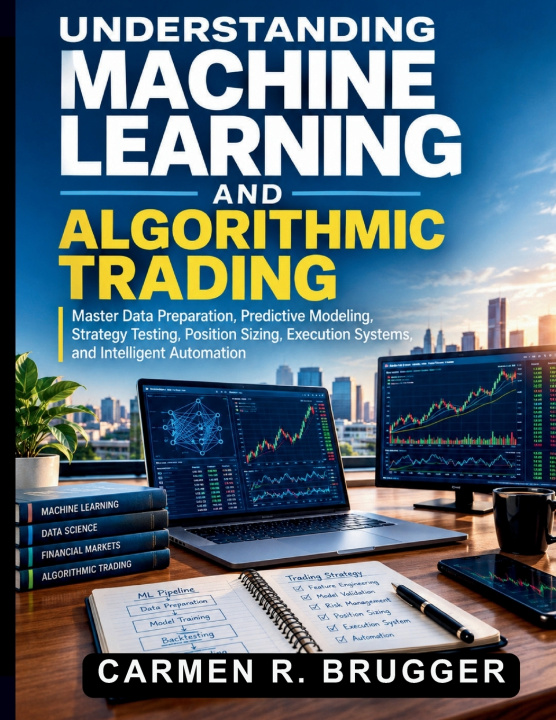
Understanding Machine Learning and Algorithmic Trading
Master Data Preparation, Predictive Modeling, Strategy Testing, Position Sizing, Execution Systems, and Intelligent Automation
 Angličtina
 49 b
49 b
 Připravujeme
 Nové
Nové
Až 30 dní na vrácení zboží

Are you curious about how machine learning can be used to analyze financial markets, discover patterns in market data, and support more disciplined trading decisions? Have you wondered how successful algorithmic strategies are designed, tested, evaluated, and transformed from an idea into a systematic process? What happens when predictive modeling meets market research, risk management, position sizing, execution, and automation?
Understanding Machine Learning and Algorithmic Trading is designed to help you explore these questions while developing a practical understanding of the technologies, methods, and workflows behind data-driven trading.
But where should you begin? How do you prepare financial data before giving it to a machine learning model? Which variables actually matter? How can you avoid misleading patterns, poor-quality data, look-ahead bias, and other problems that can make a strategy appear far more effective than it really is? And once a predictive model produces a signal, how do you turn that signal into a complete trading strategy?
This book takes you through those challenges in a structured and accessible way.
You will discover how market data can be collected, cleaned, transformed, organized, and prepared for analysis. You will examine important concepts behind feature engineering and predictive modeling while considering how different approaches can be evaluated for practical trading applications. The goal is not simply to build a model, but to understand whether its predictions can contribute meaningfully to a disciplined trading process.
What makes a strategy convincing? Is a strong backtest enough? What happens when market conditions change? Could an apparently profitable system simply be benefiting from overfitting, unrealistic assumptions, or insufficient testing? You will explore strategy testing, validation, performance evaluation, and the importance of separating research results from expectations about future performance.
You will also examine the practical side of trading systems. How much capital should be allocated to a position? How can position sizing influence both opportunity and risk? What role do volatility, exposure, drawdowns, and portfolio constraints play? And once a decision has been generated, how does an execution system handle orders, timing, costs, and operational considerations?
Beyond individual models, this book examines how intelligent automation can connect research, analysis, decision-making, monitoring, and execution into a more systematic workflow. You will learn to think about algorithmic trading as an entire process rather than as a single prediction model.
Whether you are approaching machine learning for the first time, expanding your quantitative trading knowledge, or looking for a clearer framework for connecting modeling with real-world strategy development, this book encourages you to question assumptions, evaluate evidence, and build with discipline.
Are you ready to move beyond simply asking whether a model can predict markets-and start asking whether your entire trading process is robust enough to deserve your confidence?
Start reading Understanding Machine Learning and Algorithmic Trading today and build a stronger foundation for researching, testing, sizing, executing, and automating systematic trading strategies.


Informace o knize
Angličtina

Darujte tuto knihu ještě dnes
Je to snadné
1 Přidejte knihu do košíku a zvolte doručit jako dárek 2 Obratem vám zašleme poukaz 3 Kniha dorazí na adresu obdarovanéhoAhoj! Jsem Libroamiko, tvůj knižní rádce.
Jak ti můžu pomoct?