
 Kontakt
 Jak nakupovat
Doručení
Nákupní rádce
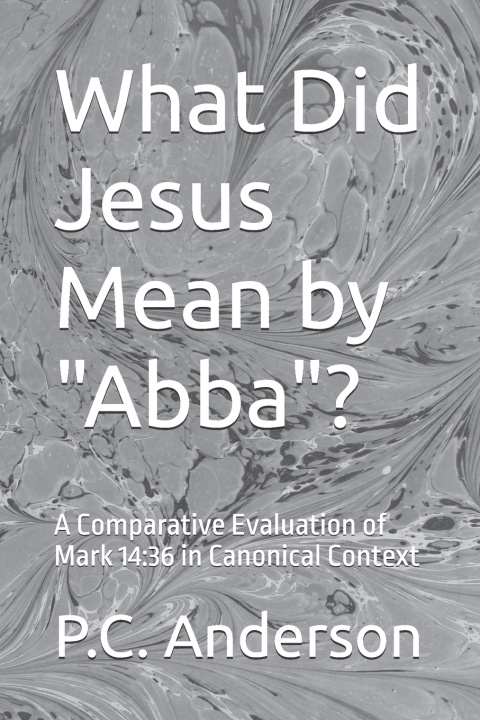
What Did Jesus Mean by "Abba"?
A Comparative Evaluation of Mark 14:36 in Canonical Context
 Angličtina
 28 b
28 b
 Nové
Nové
Až 30 dní na vrácení zboží

In the garden of Gethsemane, Jesus' cry-"Abba, Father, all things are possible for you. Remove this cup from me. Yet not what I will, but what you will" (Mark 14:36)-stands as one of the most profound and debated prayers in the New Testament. This book explores the meaning of "Abba" through a rigorous comparative framework, examining linguistic, historical, theological, and pastoral dimensions.
Key ThemesAramaic and Greek pairing: Mark uniquely preserves the Aramaic ʾabbāʾ alongside the Greek ho patēr, highlighting both intimacy and universality.
Narrative placement: The prayer occurs at the emotional climax of the Passion narrative, bridging Jesus' private anguish and public obedience.
Historical context: While paternal language for God existed in Jewish prayer, Jesus' direct use of Abba was striking in its immediacy and personal force.
Pastoral function: The prayer models both intimate access to God and costly submission, offering believers a pattern of trust and obedience.
Canonical connections: Paul later echoes the bilingual formula in Romans 8:15 and Galatians 4:6, extending Jesus' cry to the Spirit-enabled prayer of believers.
The book evaluates four major interpretive hypotheses:
Ordinary Familial Address: Abba as common Aramaic speech.
Unique Intimate Address: Abba as a distinctive marker of Jesus' personal access to God.
Expression of Submission: Abba as language of surrender in the face of suffering.
Divine Sonship Marker: Abba as revelatory of Jesus' unique identity as Son.
Each hypothesis is tested against nine variables, including lexical precision, literary structure, historical correspondence, theological coherence, and pastoral function. Tables and scoring comparisons provide clarity, while interpretive commentary highlights strengths and weaknesses.
Why This Book MattersLinguistic clarity: Dispels misconceptions such as the overly sentimental "Daddy" reading.
Theological depth: Shows how intimacy, obedience, and identity converge in Jesus' cry.
Pastoral relevance: Encourages believers to approach God with both confidence and surrender.
Canonical integration: Connects Mark's narrative to Paul's theology of adoption.
This study equips readers to evaluate the evidence for themselves, rediscovering the wonder of Scripture's message: the Son who cried "Abba, Father" in the garden is the same Lord who enables His people to pray with obedient intimacy. Whether approached linguistically, exegetically, theologically, or devotionally, the book offers a transparent, structured, and deeply enriching exploration of one of the New Testament's most pivotal addresses.


Informace o knize
Angličtina

Darujte tuto knihu ještě dnes
Je to snadné
1 Přidejte knihu do košíku a zvolte doručit jako dárek 2 Obratem vám zašleme poukaz 3 Kniha dorazí na adresu obdarovanéhoAhoj! Jsem Libroamiko, tvůj knižní rádce.
Jak ti můžu pomoct?