
 Kontakt
 Jak nakupovat

Doručení
Nákupní rádce
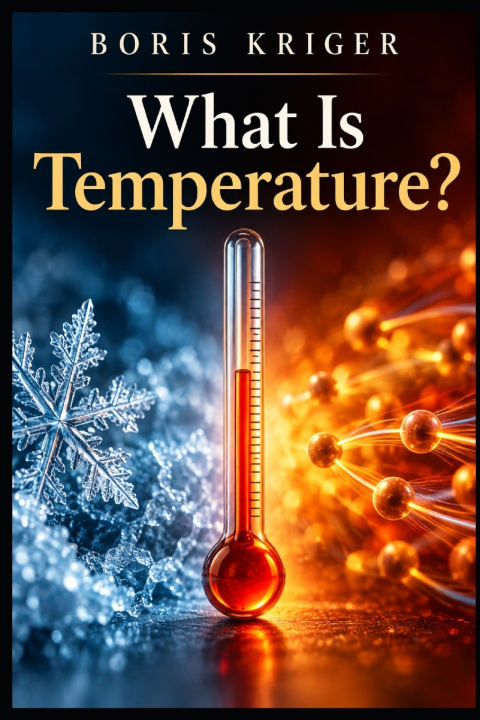
WHAT IS TEMPERATURE?
 Angličtina
 63 b
 Nové
Až 30 dní na vrácení zboží

Your thermometer is honest about the number. It is lying about the noun. When it reports that something has a temperature, it quietly assumes three things it never checks: that the something has neighbors to trade energy with, that a clock is ticking, and that everyone involved is standing still relative to the crowd. Take away any one of them and temperature does not drop to zero or soar to infinity. It simply stops existing, the way the color of the number seven stops existing.
What Is Temperature? follows that small observation to some very large places. It explains why a lone molecule cannot be warm, why the famous glow left over from the young universe has a temperature only in the way a fossil has a heartbeat, why the Sun has a temperature at every address and none overall, and why absolute zero behaves less like the floor of a scale than like a horizon you can walk toward forever. It visits the quarrel that has kept physicists arguing for a century about whether a moving body looks hotter or colder, and settles it by pointing at the sky. It meets atoms that are hotter than infinity, a nucleus that boils, and a proton that seems to radiate heat from a horizon inside itself.
And it arrives at the beginning of the universe with a claim the standard story cannot make: the beginning was neither hot nor cold. Temperature was born later, in a single event, together with clocks and weight.
Written with warmth, wit and a deep suspicion of anything that looks too obvious, this is a book for anyone who has ever shaken down a thermometer and wondered what, exactly, it was measuring.
Keywords: temperature, thermodynamics, cosmology, time, absolute zero, quantum physics, origin of the universe


Informace o knize
Angličtina
Kategorie

Darujte tuto knihu ještě dnes
Je to snadné
1 Přidejte knihu do košíku a zvolte doručit jako dárek 2 Obratem vám zašleme poukaz 3 Kniha dorazí na adresu obdarovanéhoAhoj! Jsem Libroamiko, tvůj knižní rádce.
Jak ti můžu pomoct?