
 Kontakt
 Jak nakupovat
Doručení
Nákupní rádce
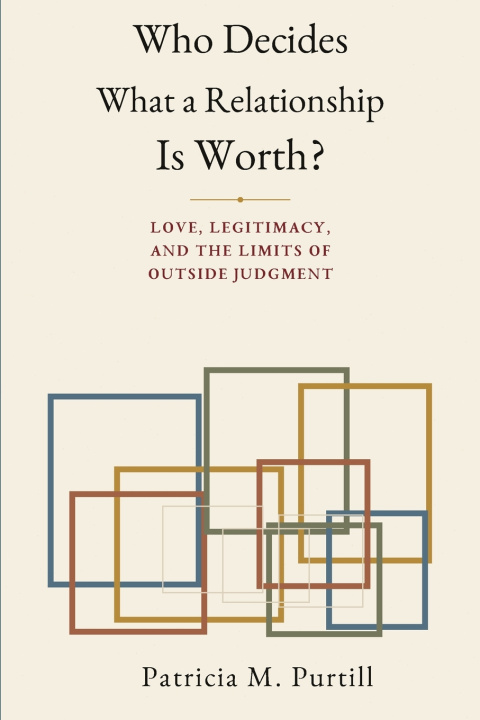
Who Decides What a Relationship Is Worth?
Love, Legitimacy, and the Limits of Outside Judgment
 Angličtina
 34 b
34 b
 Nové
Nové
Až 30 dní na vrácení zboží

A marriage certificate can prove that two people are married. It cannot prove that they love one another.
That simple distinction opens the door to a much larger question: Who gets to decide what a relationship is worth?
Our lives are filled with relationships that do not fit neatly into institutional boxes. A lifelong friend may know us better than a legal relative. Someone can love a person who does not love them back. A bond with an animal can remain profound even when regulation requires separation. Grief can be real even when society does not recognize the relationship that produced it. Increasingly, people form meaningful attachments through artificial intelligence, raising new questions about human experience, machine consciousness, and the power of the companies that control those systems.
In Who Decides What a Relationship Is Worth?, Patricia M. Purtill explores what happens when different people, experts, families, institutions, and governments possess legitimate authority over different parts of the same relational situation.
The central problem is often not that somebody is wrong. It is that one true fact is allowed to decide too much.
A spouse may have legal status without necessarily knowing a patient's wishes best. A person's attachment may be genuine without creating a right to another person's participation. An expert may correctly identify a welfare or safety risk without thereby determining what a relationship meant to the people living it. An institution may have authority to impose a necessary rule without gaining authority to rewrite the significance of what is lost.
Drawing on philosophy, law, sociology, psychology, grief research, animal welfare, public policy, medical ethics, and emerging research on AI companionship, the book develops a practical way of separating questions that are too often collapsed together:
What does this relationship mean to the participant?
Is it mutual?
Is it healthy?
Who has standing to question it?
What evidence may an institution reasonably demand?
Who owes something because the relationship matters?
When may someone leave?
What remains owed when a justified decision still causes genuine loss?
And when someone must ultimately have the last word, what exactly does that last word decide?
Warmly written for readers beyond academia, Who Decides What a Relationship Is Worth? is not an argument that every relationship deserves recognition, preservation, or legal protection. It is an argument for greater precision, humility, and humanity when we judge the relationships that structure other people's lives.
Because sometimes several people can be right about different parts of the same situation.
The hard question is what each of those truths is allowed to decide.


Informace o knize
Angličtina

Darujte tuto knihu ještě dnes
Je to snadné
1 Přidejte knihu do košíku a zvolte doručit jako dárek 2 Obratem vám zašleme poukaz 3 Kniha dorazí na adresu obdarovanéhoAhoj! Jsem Libroamiko, tvůj knižní rádce.
Jak ti můžu pomoct?