
 Kontakt
 Jak nakupovat
Doručení
Nákupní rádce
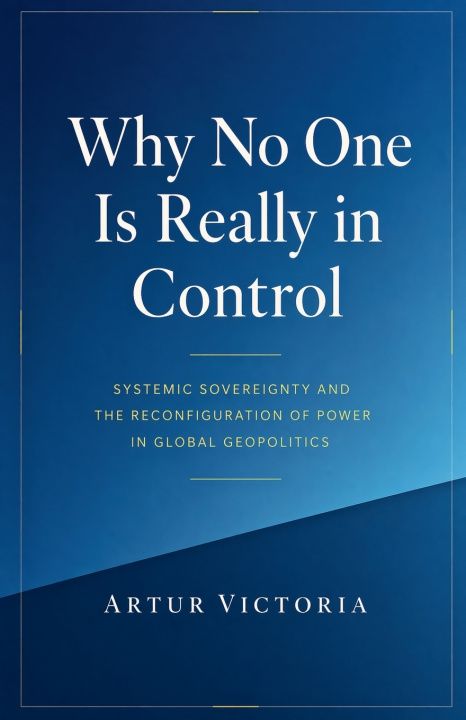
Why No One Is Really in Control
 Angličtina
 41 b
41 b
 Nové
Nové
Až 30 dní na vrácení zboží

Why No One Is Really in Control examines the transformation of power, sovereignty, and international order in the twenty-first century, arguing that the greatest challenge confronting states is not the disappearance of authority but the fragmentation of control across increasingly interconnected global systems. Combining insights from international relations, political sociology, complexity theory, network science, and systems thinking, the book demonstrates how globalization, technological interdependence, financial integration, digital infrastructures, and geopolitical competition have reshaped the exercise of power. Rather than producing a post-sovereign or post-geopolitical world, these developments have created a fragmented systemic order in which military capability, technological resilience, economic security, information control, and institutional legitimacy interact continuously. The concept of systemic sovereignty is proposed as a new theoretical framework for understanding how states preserve strategic autonomy within complex networks of dependence and vulnerability. The book concludes that no single actor controls the contemporary international system; instead, power is increasingly distributed across overlapping infrastructures, institutions, and strategic networks, making resilience, adaptability, and systemic governance the defining foundations of statecraft in the twenty-first century.


Informace o knize
Angličtina

Darujte tuto knihu ještě dnes
Je to snadné
1 Přidejte knihu do košíku a zvolte doručit jako dárek 2 Obratem vám zašleme poukaz 3 Kniha dorazí na adresu obdarovanéhoAhoj! Jsem Libroamiko, tvůj knižní rádce.
Jak ti můžu pomoct?