
 Kontakt
 Jak nakupovat
Doručení
Nákupní rádce
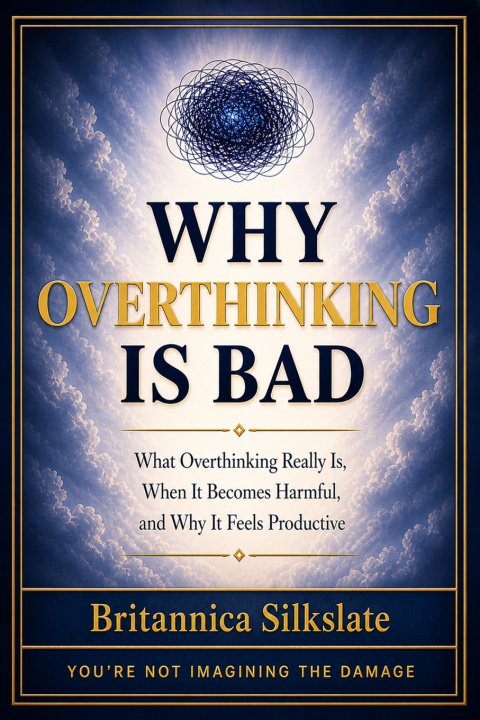
WHY OVERTHINKING IS BAD
What Overthinking Really Is, When It Becomes Harmful, and Why It Feels Productive
 Angličtina
 36 b
36 b
 Nové
Nové
Až 30 dní na vrácení zboží

Why Overthinking Is Bad
Most books on overthinking tell you to stop. This one explains why you cannot.
Why Overthinking Is Bad examines overthinking as a cognitive process, not a personality flaw, emotional weakness, or discipline problem. Instead of motivational advice, positivity frameworks, or coping strategies, this book analyzes the mechanics of sustained thinking and explains why the mind continues evaluating long after clarity stops increasing.
This is a structured examination of how overthinking actually operates.
What This Book CoversOverthinking is widely misunderstood. Many people confuse it with anxiety, sensitivity, intelligence, perfectionism, or reflection. This book separates those categories and defines overthinking as a specific cognitive pattern: continued mental activity without narrowing toward clarity, conclusion, or resolution.
Inside, readers will explore:
- how overthinking differs from reflection
- why repetitive thoughts feel productive
- how mental overload develops gradually
- why analysis paralysis occurs
- how evaluation loops sustain themselves
- how cognitive fatigue accumulates
- why unresolved thinking persists
- how overthinking affects decisions and clarity
- why the mind continues working past diminishing returns
Rather than treating overthinking as emotional weakness or lack of discipline, this book examines it as a coherent cognitive process with identifiable patterns and internal logic.
Who This Book Is ForThis book is designed for readers who replay conversations after they end.
Readers who re-analyze decisions already made.
Readers who feel mentally drained without understanding why.
Readers stuck inside evaluation loops they cannot interrupt.
Readers who experience repetitive thoughts, mental crowding, cognitive overload, or mental exhaustion.
Readers who want to understand the mechanics of their thinking rather than receive instructions to simply think less.
This book does not reduce overthinking to mindset, motivation, positivity, or productivity. It treats the reader as someone capable of understanding a structured explanation of their own cognition.
What Makes This Book DifferentMost books in this category focus on coping strategies, affirmations, breathing techniques, or reframing methods.
This book does not.
The goal is not motivational uplift.
The goal is not behavioral correction.
The goal is precise explanation.
Readers who finish this book will understand why overthinking feels internally logical while it is happening, why repetitive thought patterns become difficult to interrupt, and why cognitive fatigue accumulates across repeated cycles of evaluation.
Most importantly, they will understand why sustained thinking can continue even after clarity has stopped increasing.
Understanding the structure of a problem is the first condition for addressing it with precision.
Topics CoveredOverthinking. Repetitive thoughts. Mental overload. Cognitive fatigue. Analysis paralysis. Rumination. Decision fatigue. Emotional exhaustion from thinking. Thought patterns. Reflection versus overload. Unresolved thinking. Chronic mental evaluation. Over-analyzing. Psychology of overthinking. Behavioral psychology. Cognitive psychology. Mental exhaustion. Intrusive thought repetition. Thinking too much.
For Readers Searching ForBooks about overthinking. Cognitive overload psychology. Why thoughts repeat. Mental exhaustion books. Decision fatigue explained. Analysis paralysis causes. Psychology of repetitive thoughts. Books for overthinkers. Understanding cognitive fatigue. Why the mind will not stop thinking.


Informace o knize
Angličtina

Darujte tuto knihu ještě dnes
Je to snadné
1 Přidejte knihu do košíku a zvolte doručit jako dárek 2 Obratem vám zašleme poukaz 3 Kniha dorazí na adresu obdarovanéhoAhoj! Jsem Libroamiko, tvůj knižní rádce.
Jak ti můžu pomoct?