
 Kontakt
 Jak nakupovat
Doručení
Nákupní rádce
 Angličtina
 47 b
47 b
 Nové
Nové
Až 30 dní na vrácení zboží

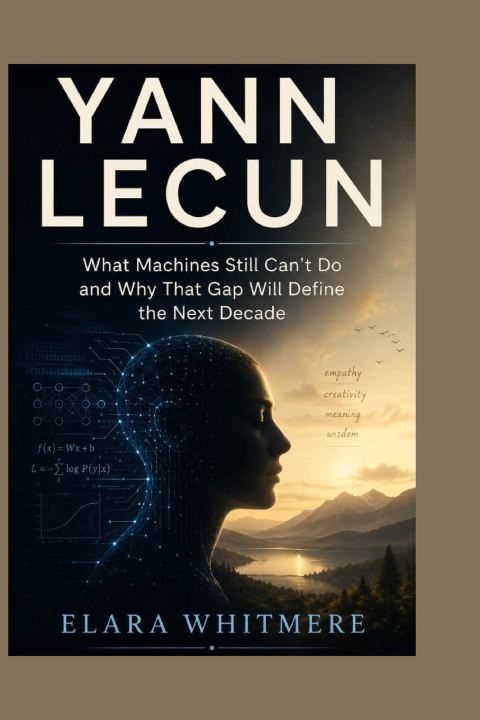
Artificial intelligence can write, predict, recognize patterns, generate images, analyze information, and perform tasks that once required human effort. Yet beneath these impressive abilities lies a difficult question: what can machines still not do and why might that missing intelligence define the next decade?
Today's AI can process enormous amounts of data, but recognizing patterns is not the same as understanding the world. Machines can produce convincing answers while struggling with common sense, causal reasoning, long-term planning, physical interaction, uncertainty, memory, and real-world consequences. This gap becomes even more important as AI moves beyond screens and into autonomous agents, robots, vehicles, factories, homes, laboratories, and other environments where mistakes can have real consequences.
This book takes a clear look at the deeper problems standing between today's AI and genuinely capable machine intelligence. It examines why learning from text and images has limits, how self-supervised learning and world models could create richer internal representations, why prediction alone cannot replace causal reasoning, and what machines need to move from generating answers to reliably solving problems. It also considers the difficult transition from digital systems to autonomous agents and robots, the importance of perception and real-world feedback, the technological breakthroughs needed for safe independence, and the competing approaches that could shape AI throughout the 2030s.
More importantly, the book looks beyond the excitement surrounding larger models and greater computing power. It asks whether scaling alone can solve the hardest problems, or whether future progress will require fundamentally better ways for machines to learn, remember, reason, predict, interact, and act. It considers the economic and strategic consequences of increasingly capable machines that may become extremely useful without ever becoming fully intelligent in the human sense.
For anyone trying to understand where artificial intelligence is heading, the central issue is not simply how powerful the next model will become. It is whether machines can finally bridge the gap between prediction, reasoning, and action. That transition could determine which AI systems become truly useful, which technologies reshape entire industries, and how deeply intelligent machines influence everyday life. The next decade may not be defined by machines that know everything, but by machines that can understand enough to act, learn from what happens, and improve their decisions when reality proves them wrong.


Informace o knize
Angličtina

Darujte tuto knihu ještě dnes
Je to snadné
1 Přidejte knihu do košíku a zvolte doručit jako dárek 2 Obratem vám zašleme poukaz 3 Kniha dorazí na adresu obdarovanéhoAhoj! Jsem Libroamiko, tvůj knižní rádce.
Jak ti můžu pomoct?