
 Kontakt
 Jak nakupovat
Doručení
Nákupní rádce
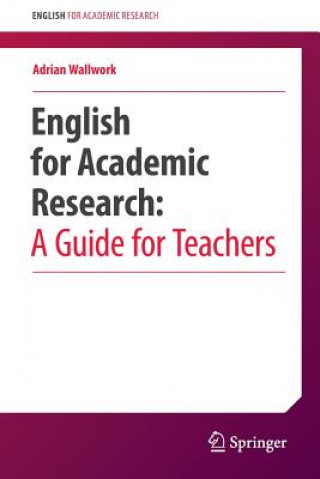
English for Academic Research: A Guide for Teachers
 Angličtina
 58 b
58 b
Až 30 dní na vrácení zboží
Zákazníci také koupili














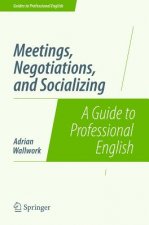
Scientific English is possibly the most rewarding area of EFL teaching. It differs from English for Academic Purposes (EAP) as it is directed to a much smaller audience: PhD and postdoc students. Courses on Scientific English are held in universities throughout the world, yet there is very little support for teachers in understanding what to teach and how to teach it.§§ This guide is part of the English for Academic Research series. Part 1 of the book sheds light on the world of academia, the writing of research papers, and the role of journal editors and reviewers. Part 2 gives practical suggestions on how to help your students improve their presentation skills. In Part 3 you will learn how to teach academic skills using nonacademic examples. Parts 1-3 are thus useful for anyone involved in teaching academic English, whether they have used the other books in the series or not. Part 4 suggests two syllabuses for teaching writing and presenting skills, based on the two core books: § English for Writing Research Papers§ English for Presentations at International Conferences§§ This book will help you i) understand the world of your students (i.e. academic research), ii) plan courses, and iii) exploit the What's the Buzz? sections in the books on Writing,§ Presentations, Correspondence and Interacting on Campus.§§ Adrian Wallwork has written over 30 books covering General English (Cambridge University Press, Scholastic), Business English (Oxford University Press), and Scientific English (Springer). He has trained several thousand PhD students from all over the world to write and present their research. Adrian also runs a scientific editing service: English for Academics (E4AC).§§


Informace o knize
Angličtina

Darujte tuto knihu ještě dnes
Je to snadné
1 Přidejte knihu do košíku a zvolte doručit jako dárek 2 Obratem vám zašleme poukaz 3 Kniha dorazí na adresu obdarovanéhoMohlo by vás také zajímat


 /
/
 Brožovaná
 1 165
Kč
1 165
Kč

 /
Pevná
592
Kč
/
Pevná
592
Kč



 /
Brožovaná
752
Kč
/
Brožovaná
752
Kč




 /
Brožovaná
428
Kč
/
Brožovaná
428
Kč

Ahoj! Jsem Libroamiko, tvůj knižní rádce.
Jak ti můžu pomoct?